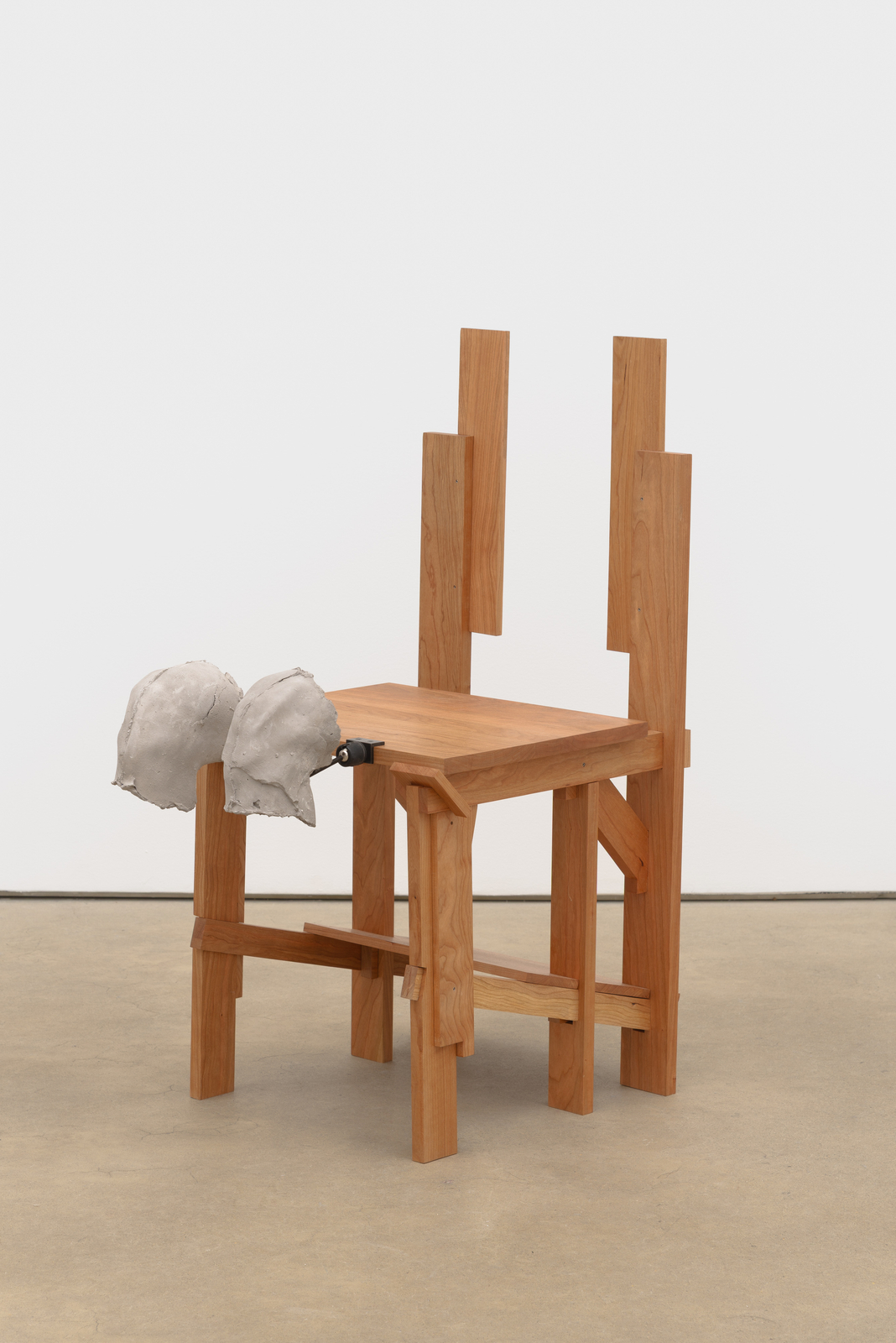
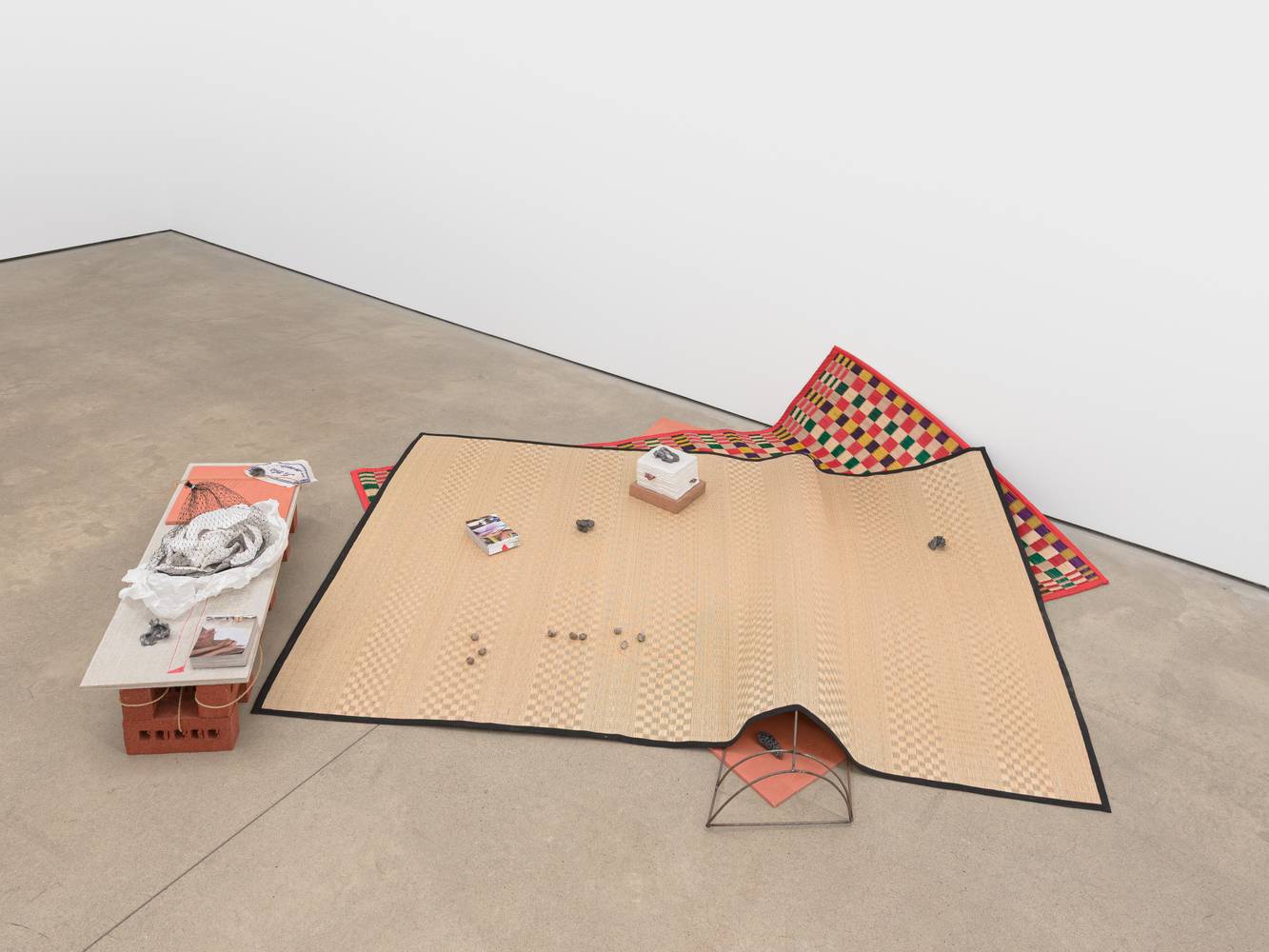
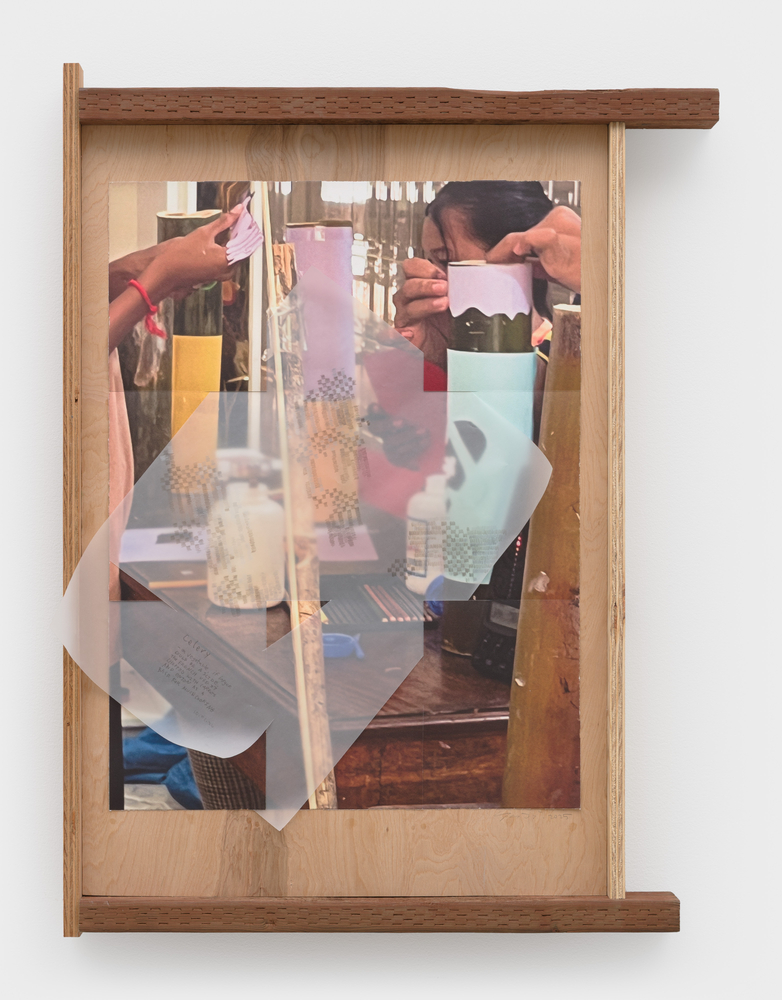
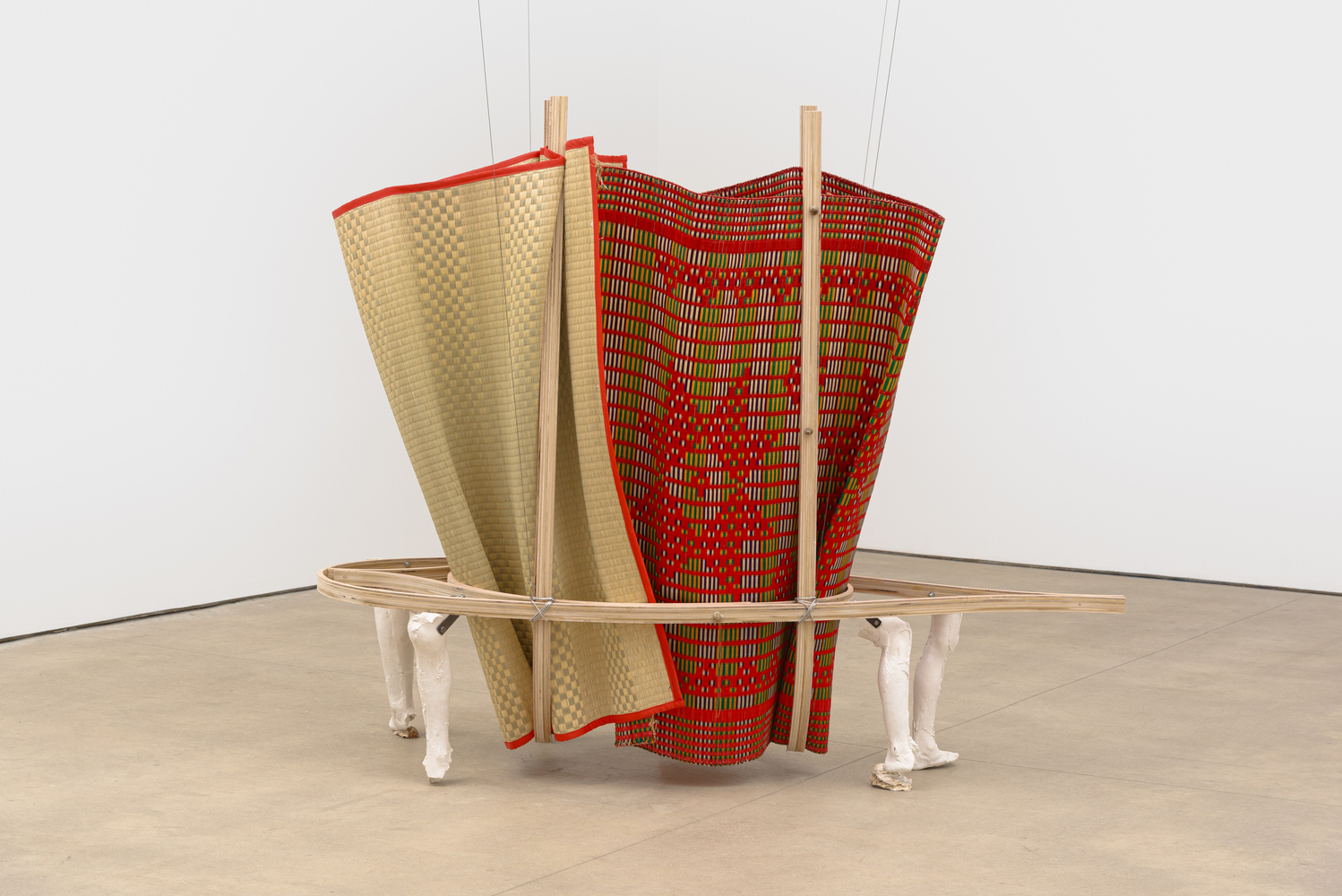
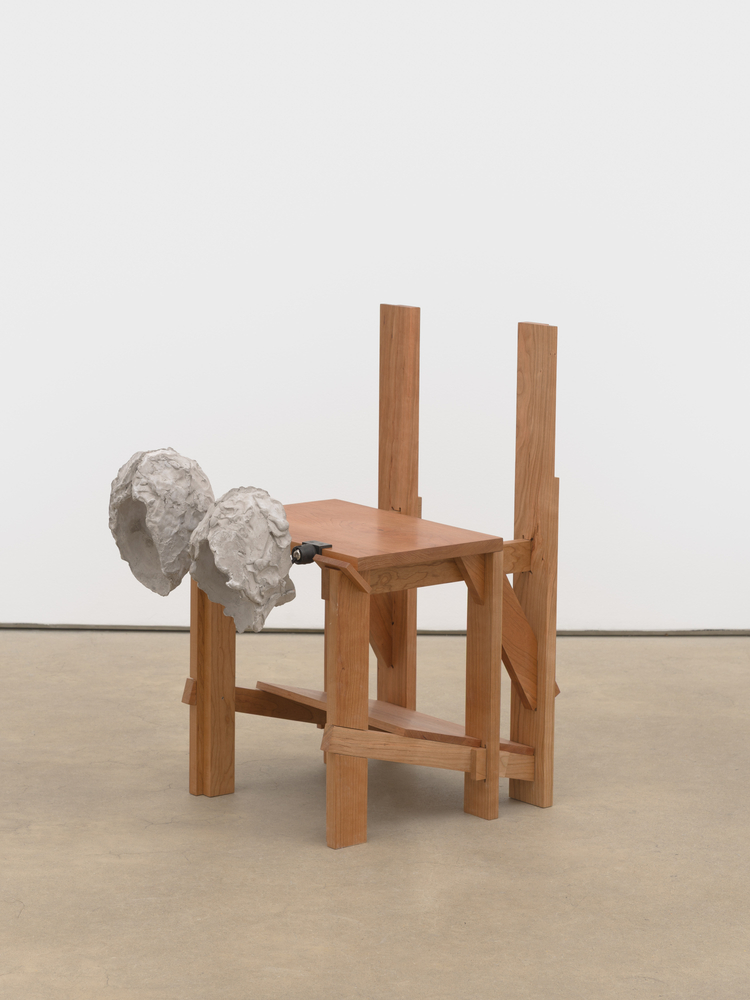
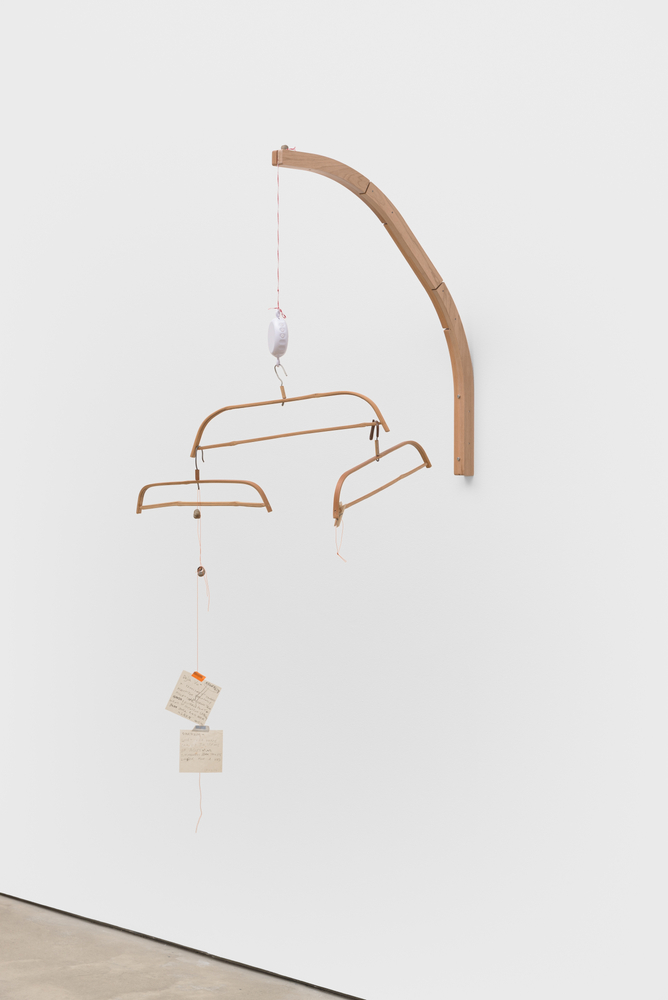
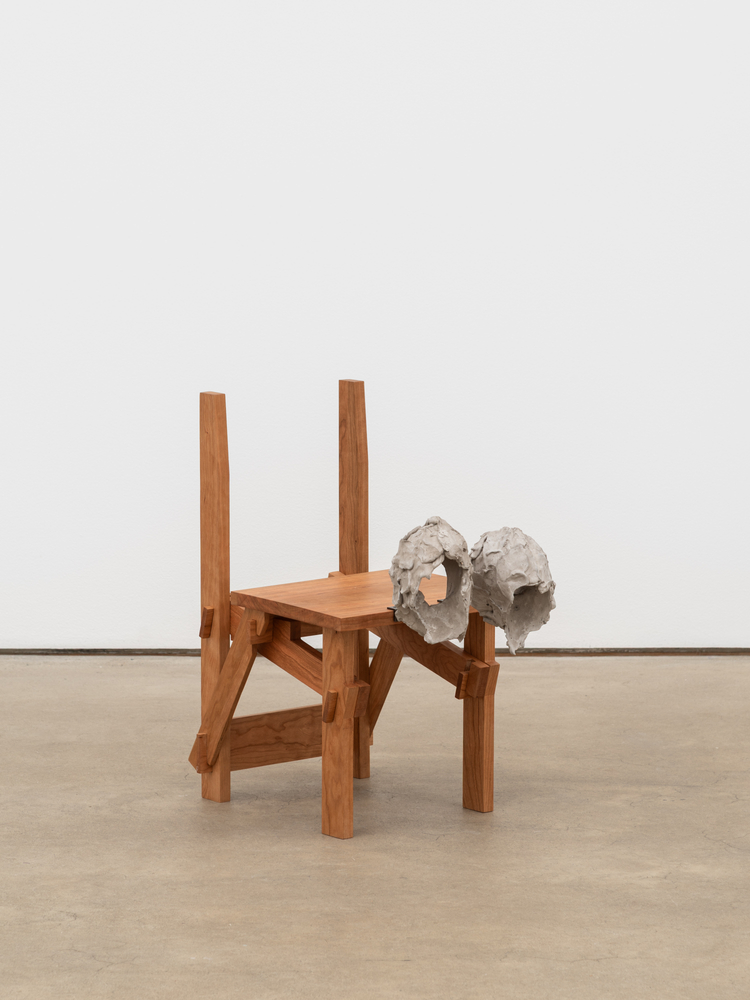
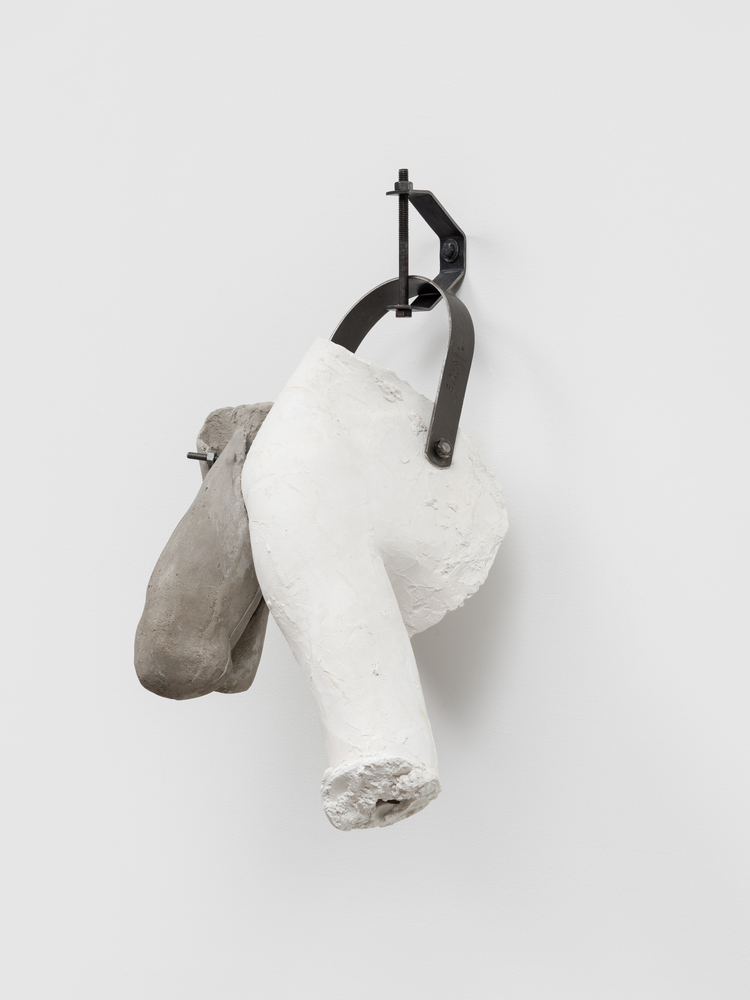
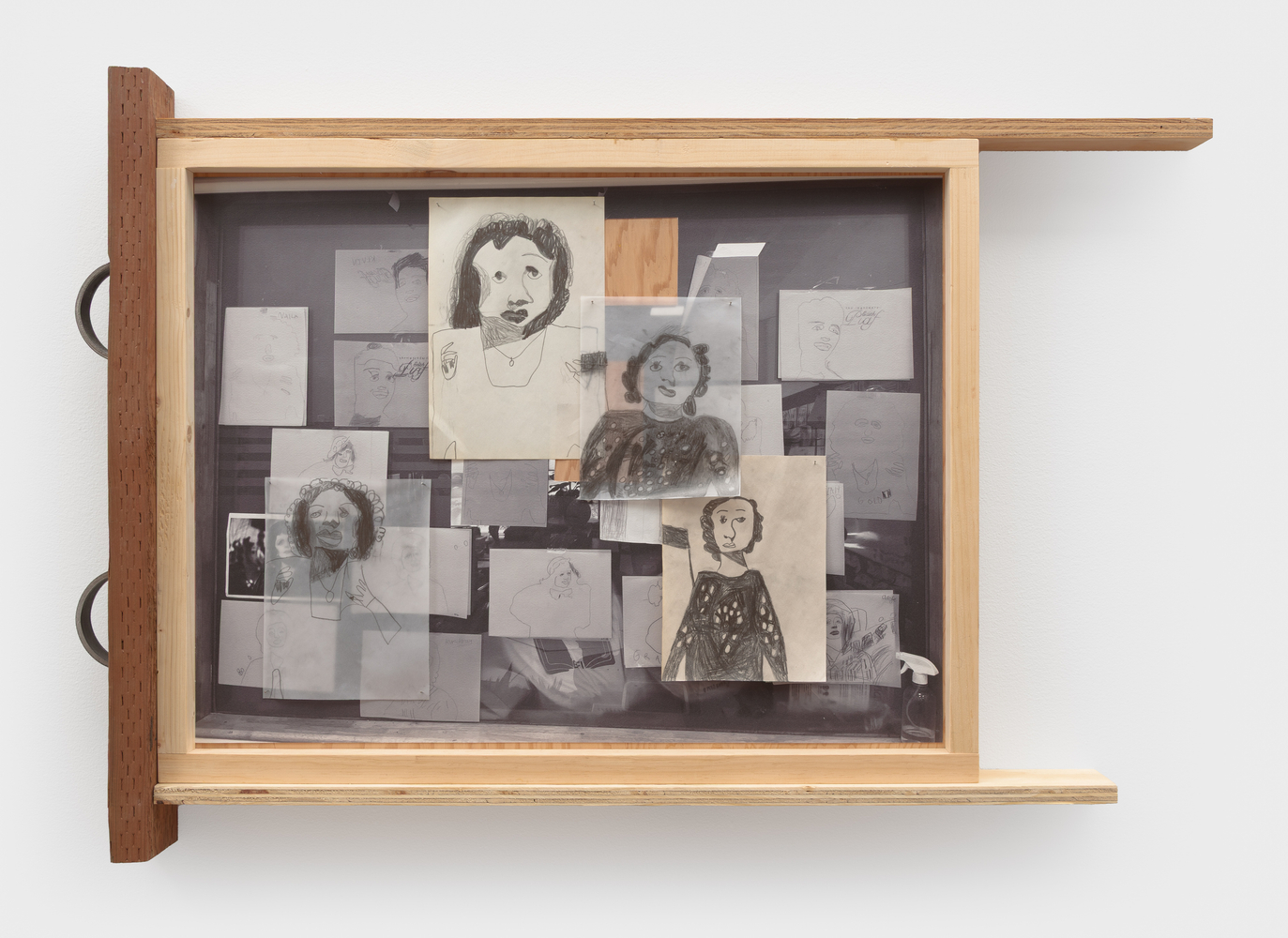
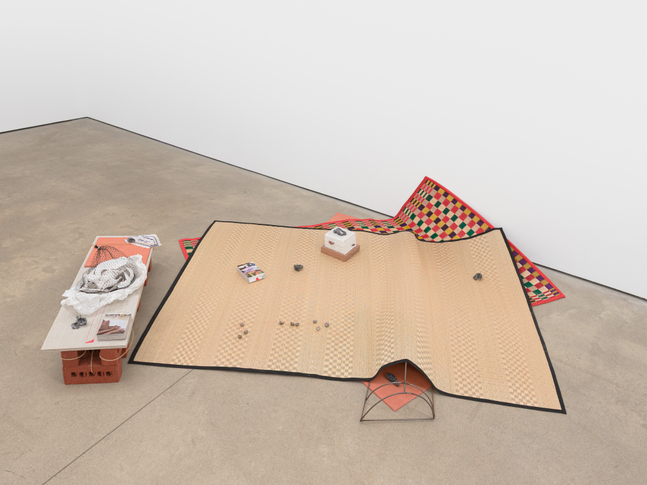
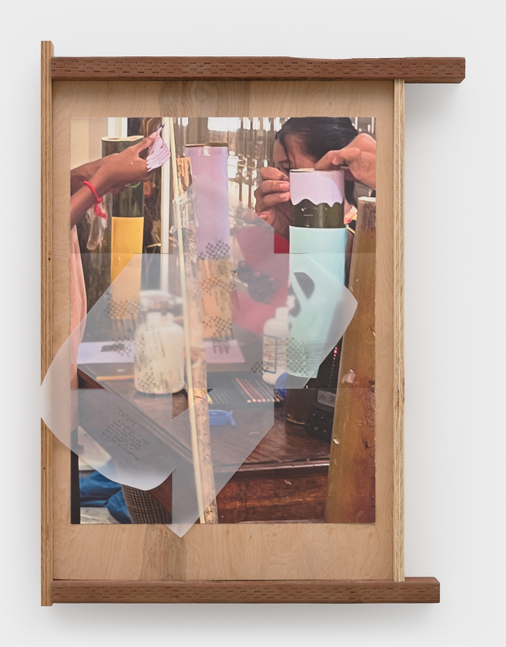
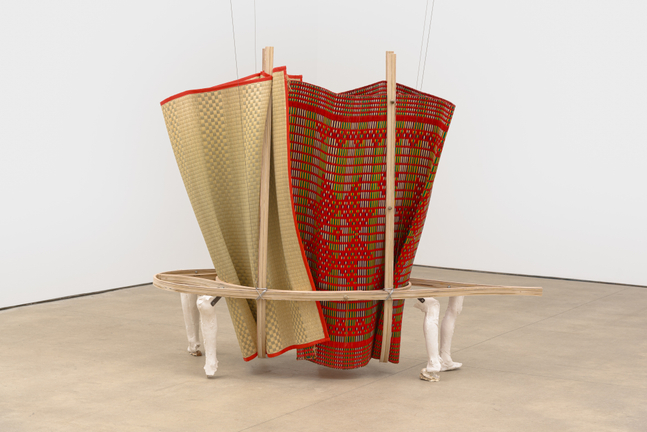
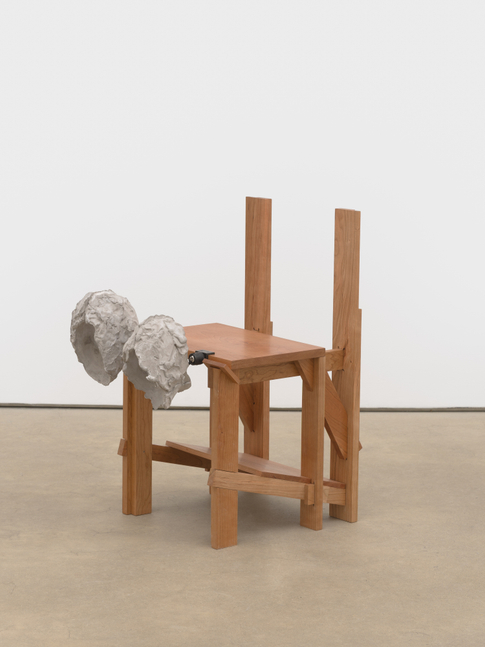
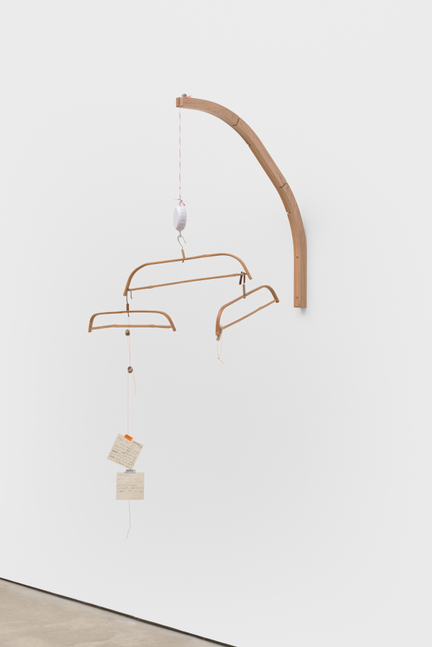
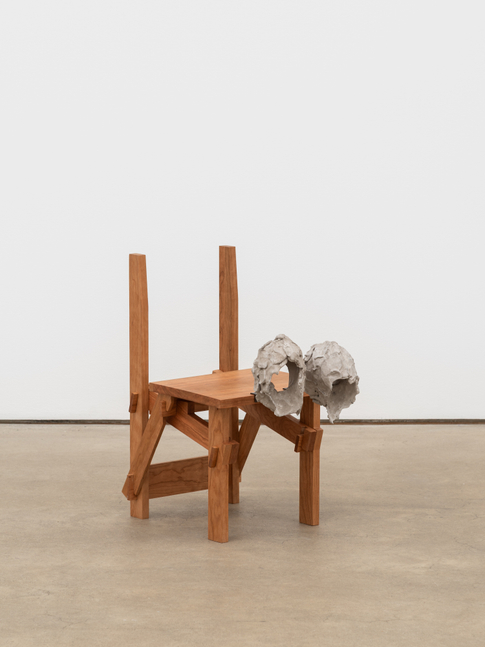
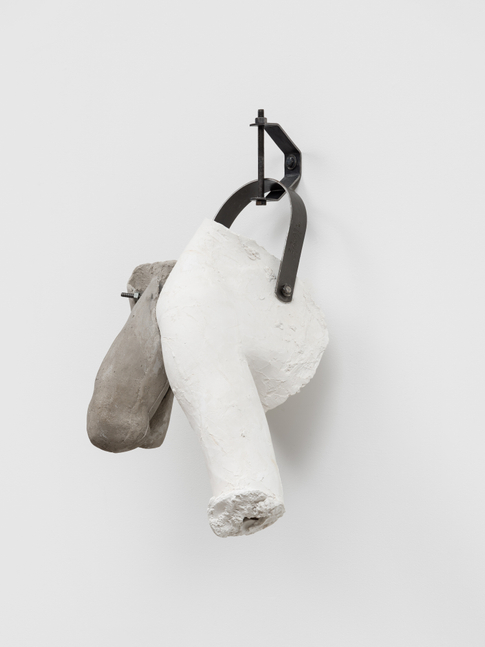
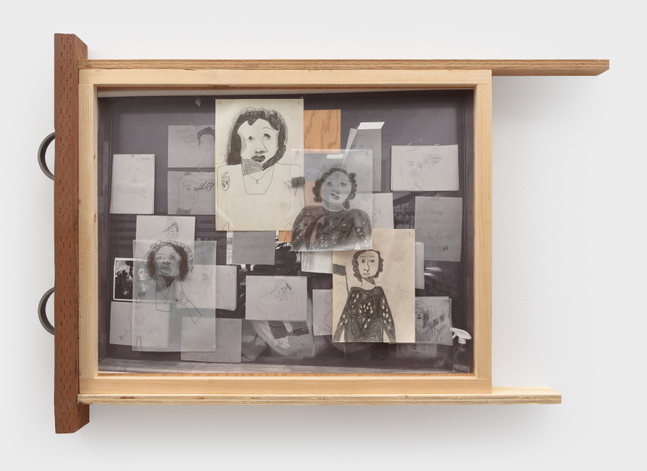
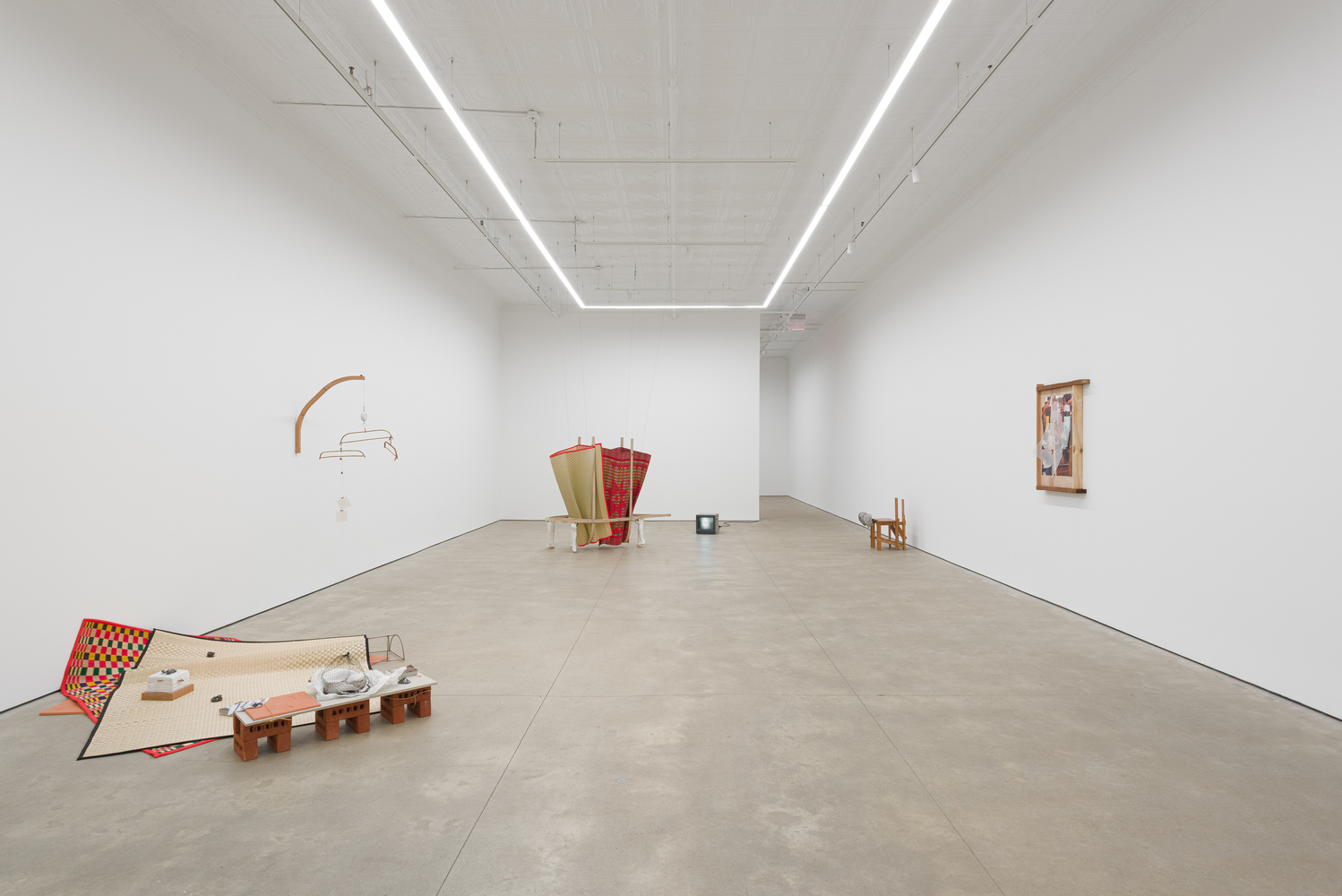
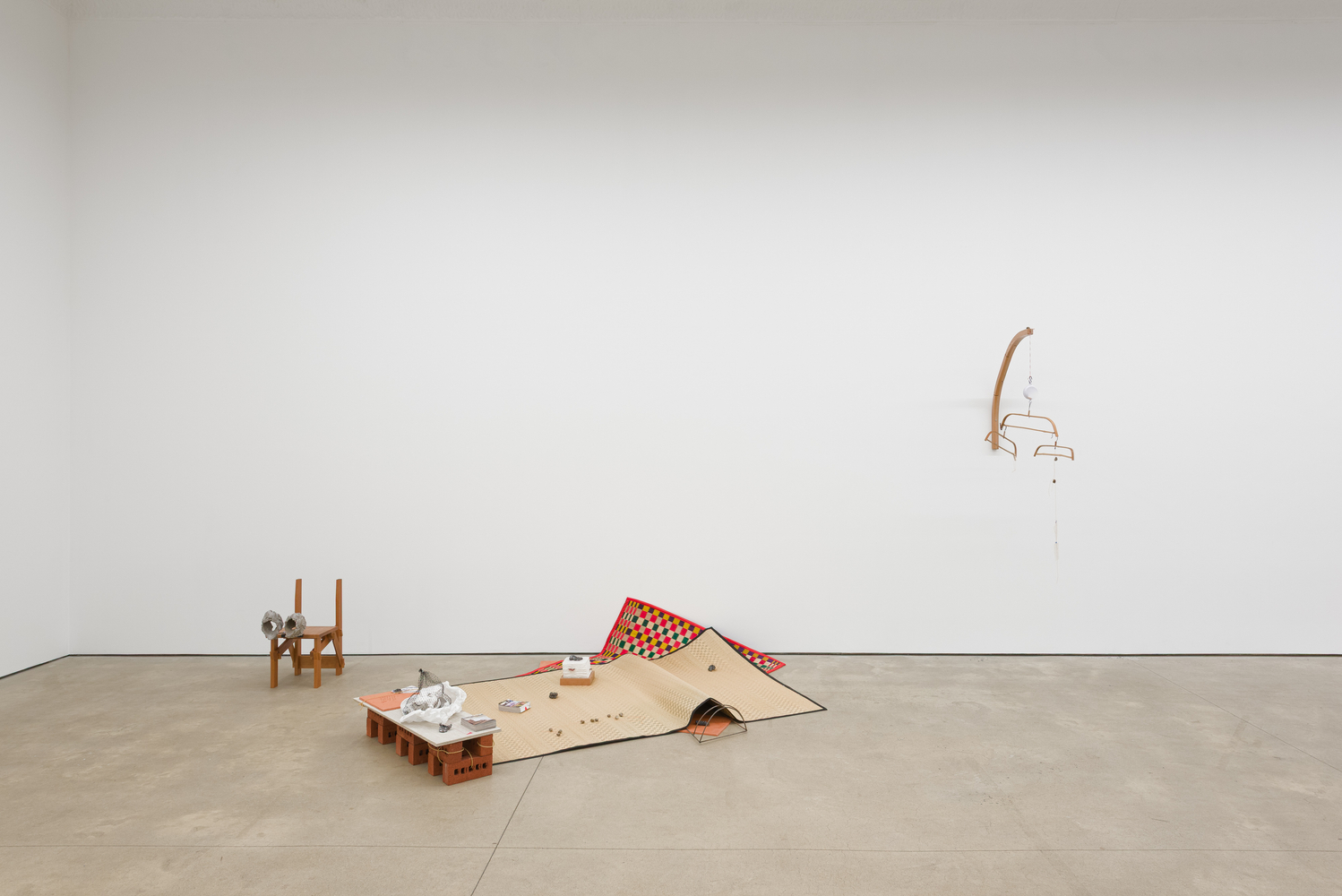
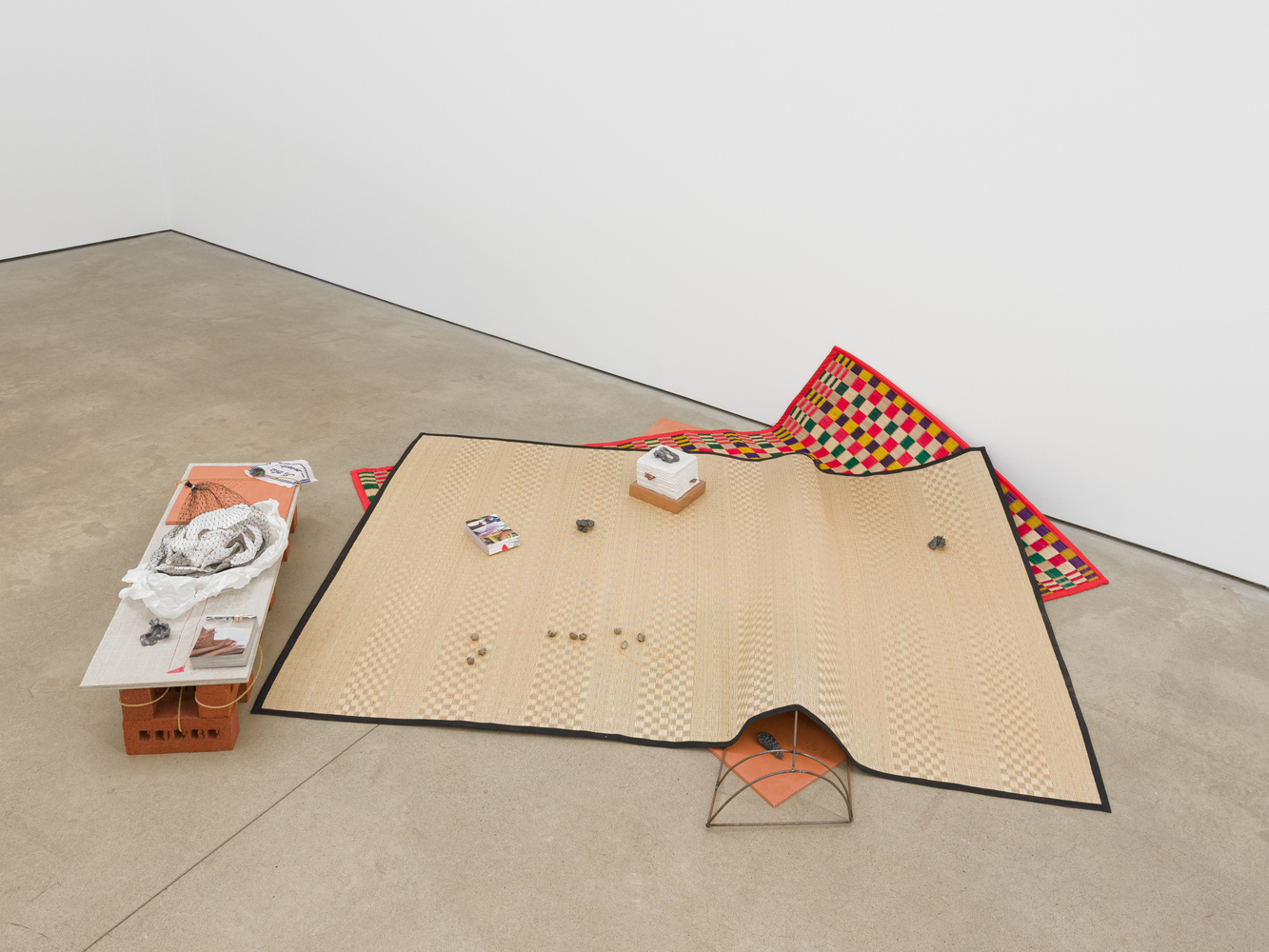
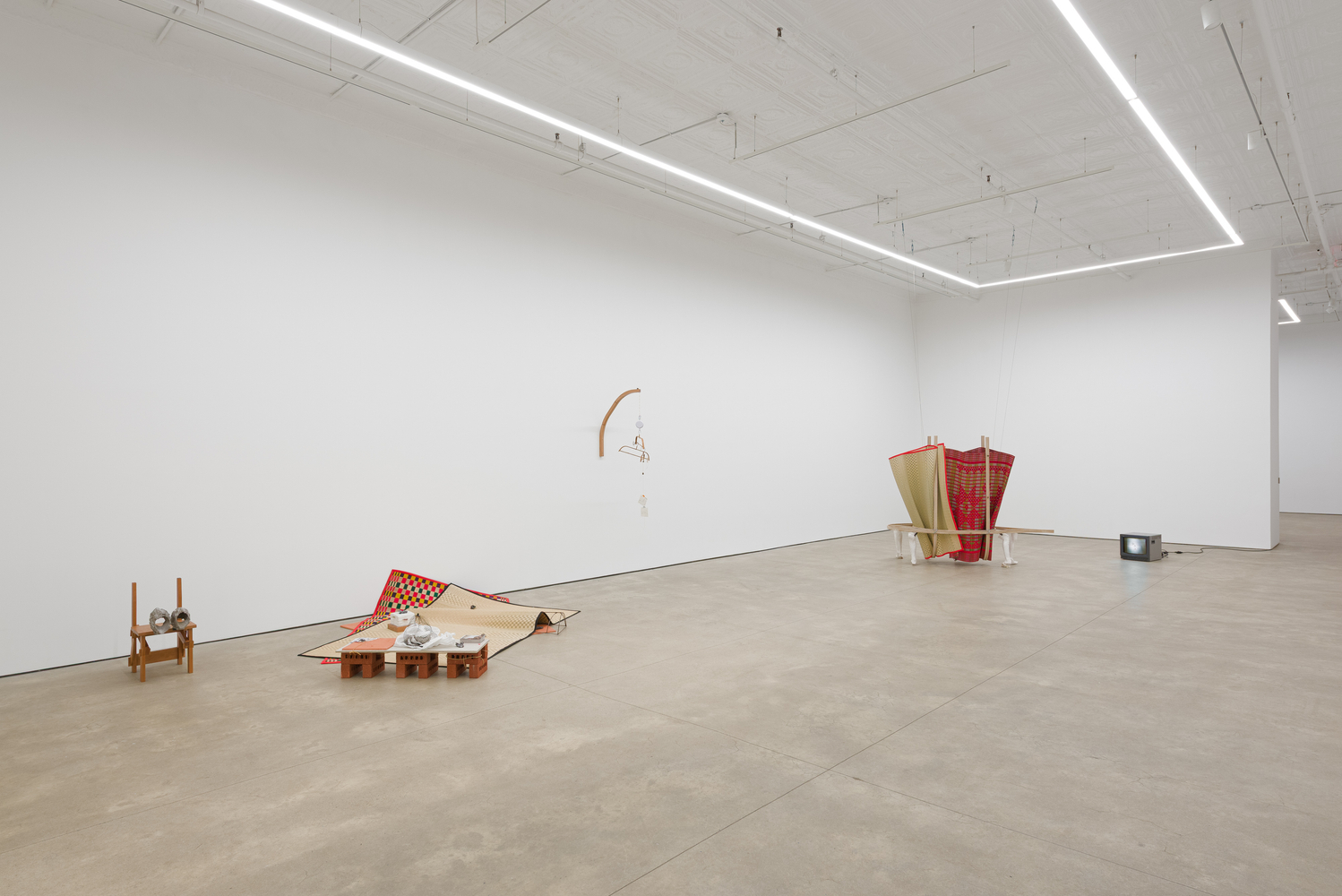
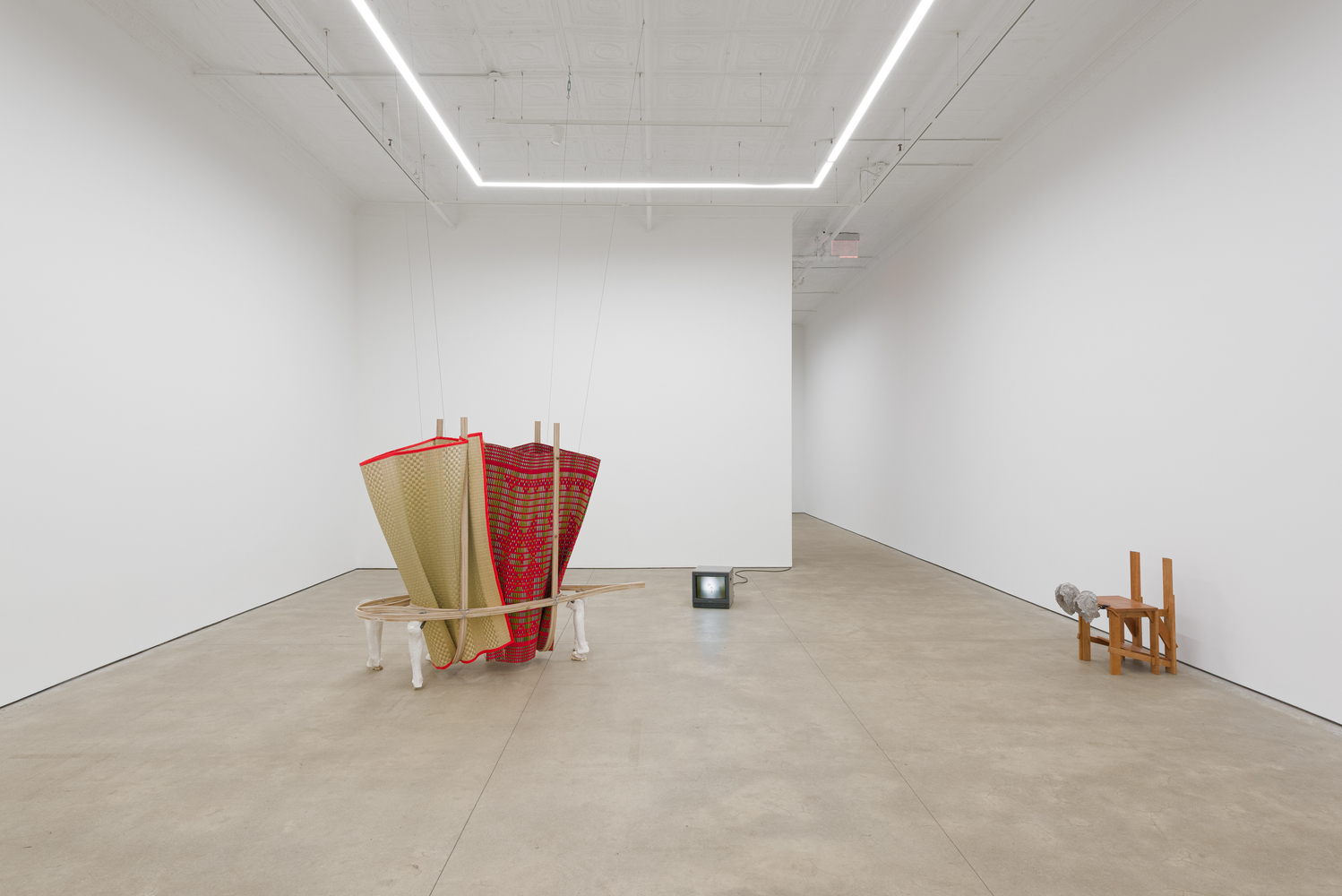
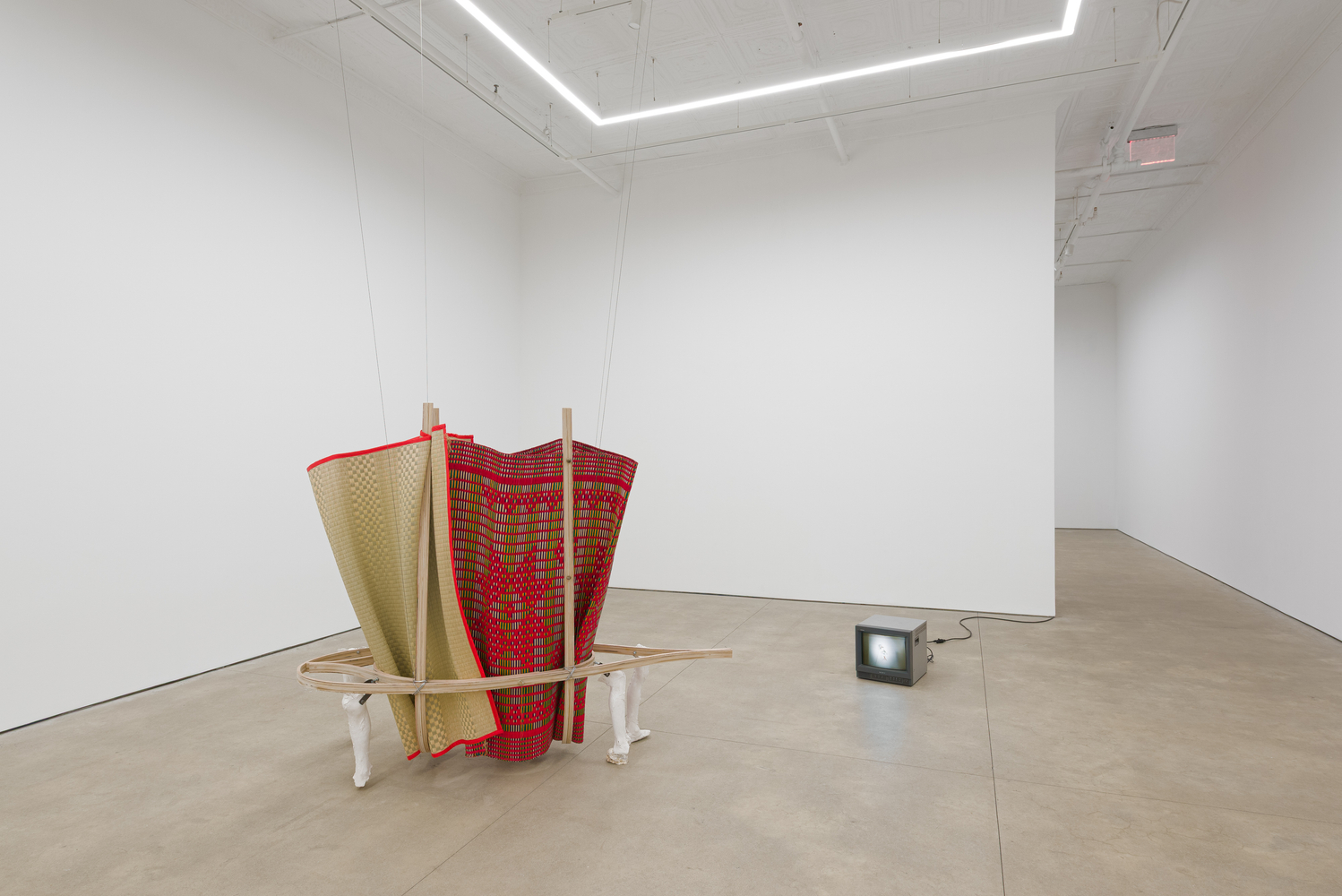
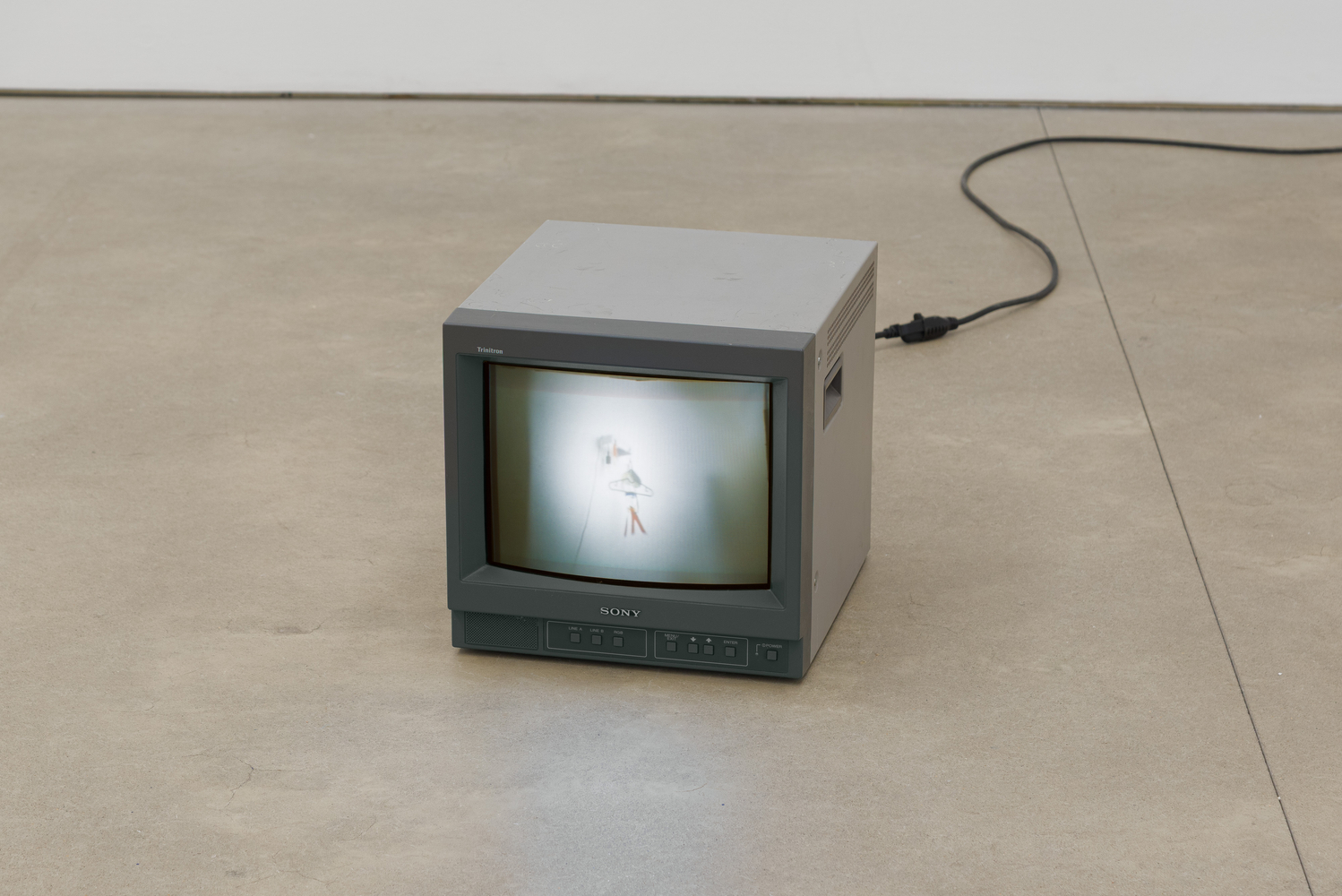
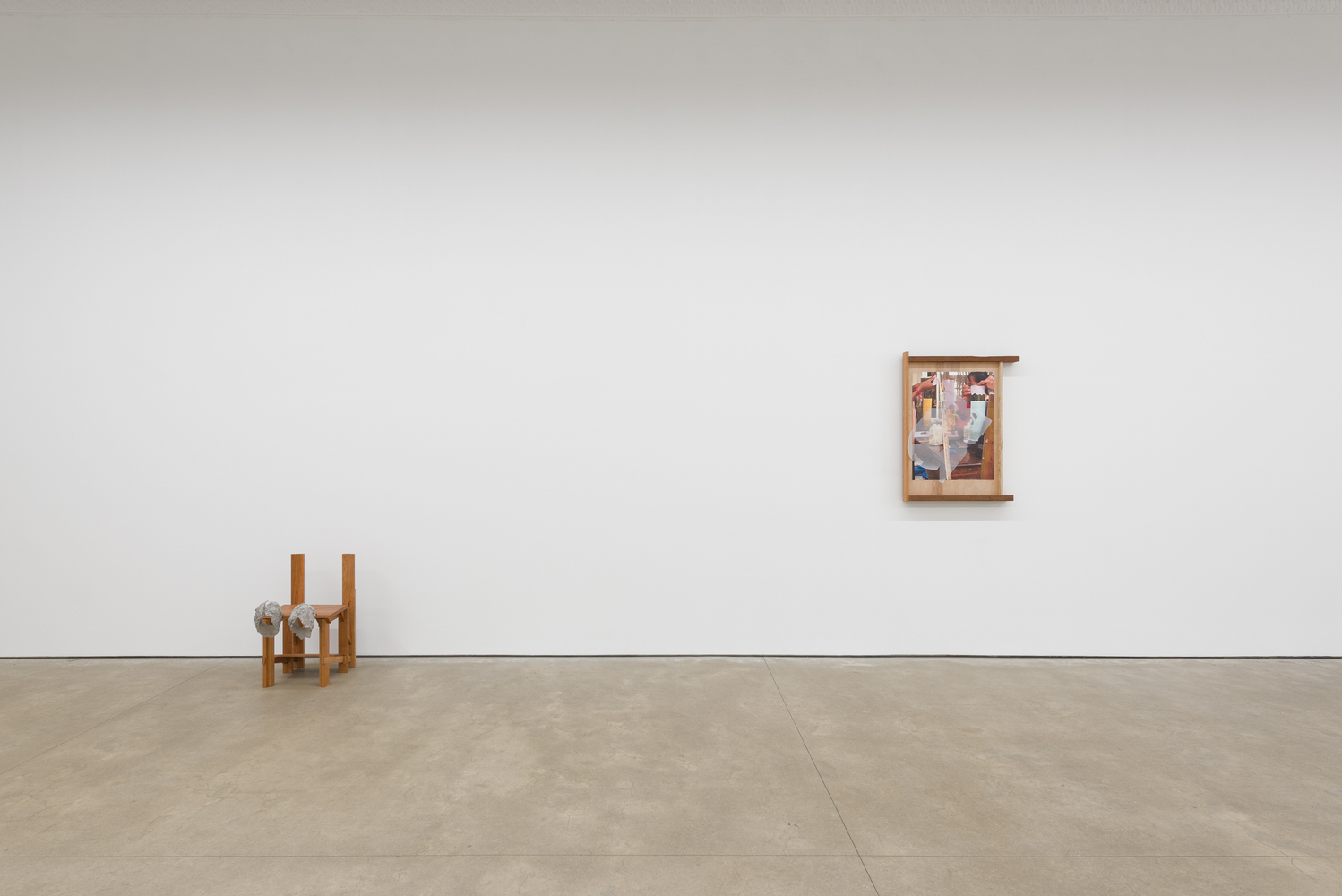
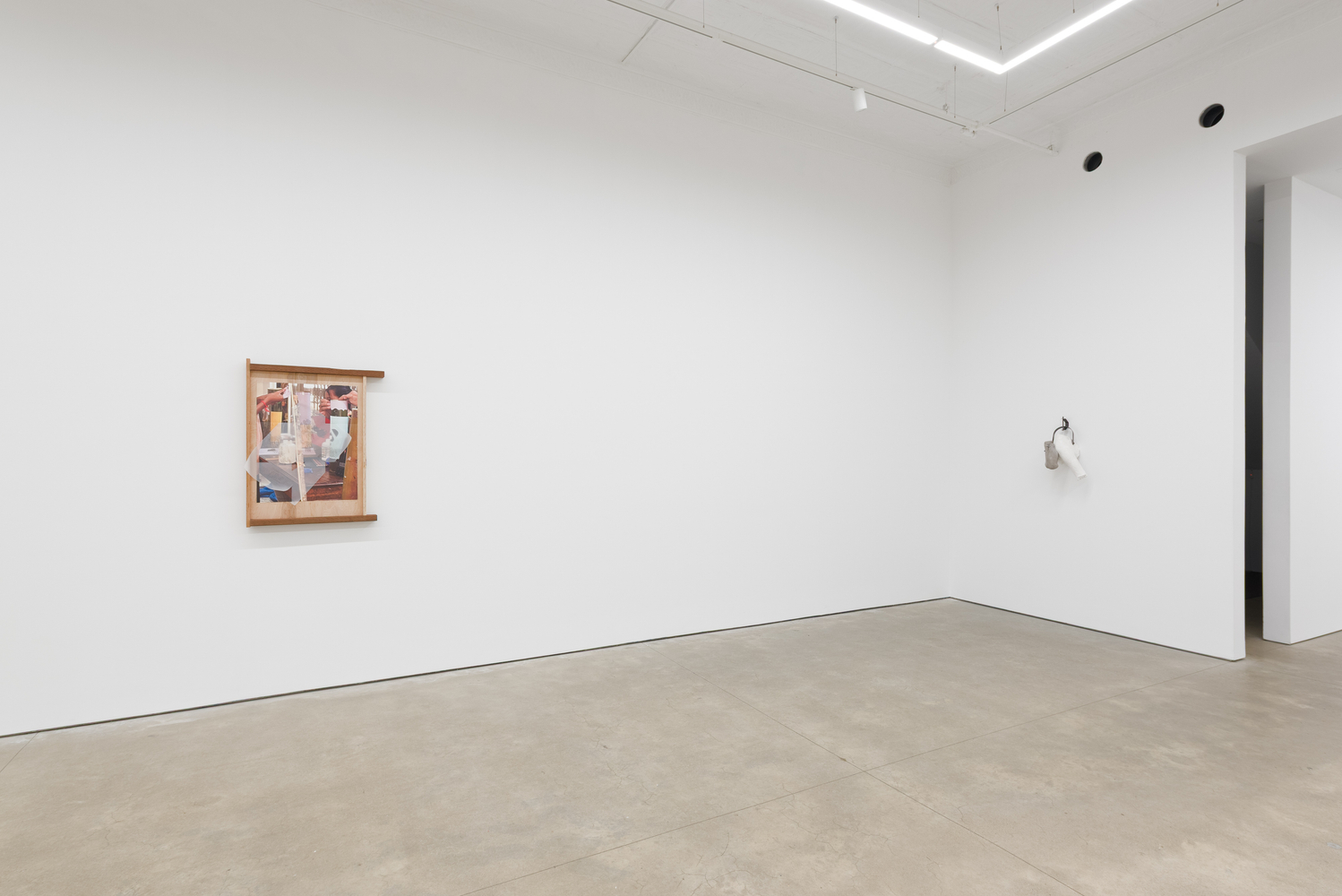
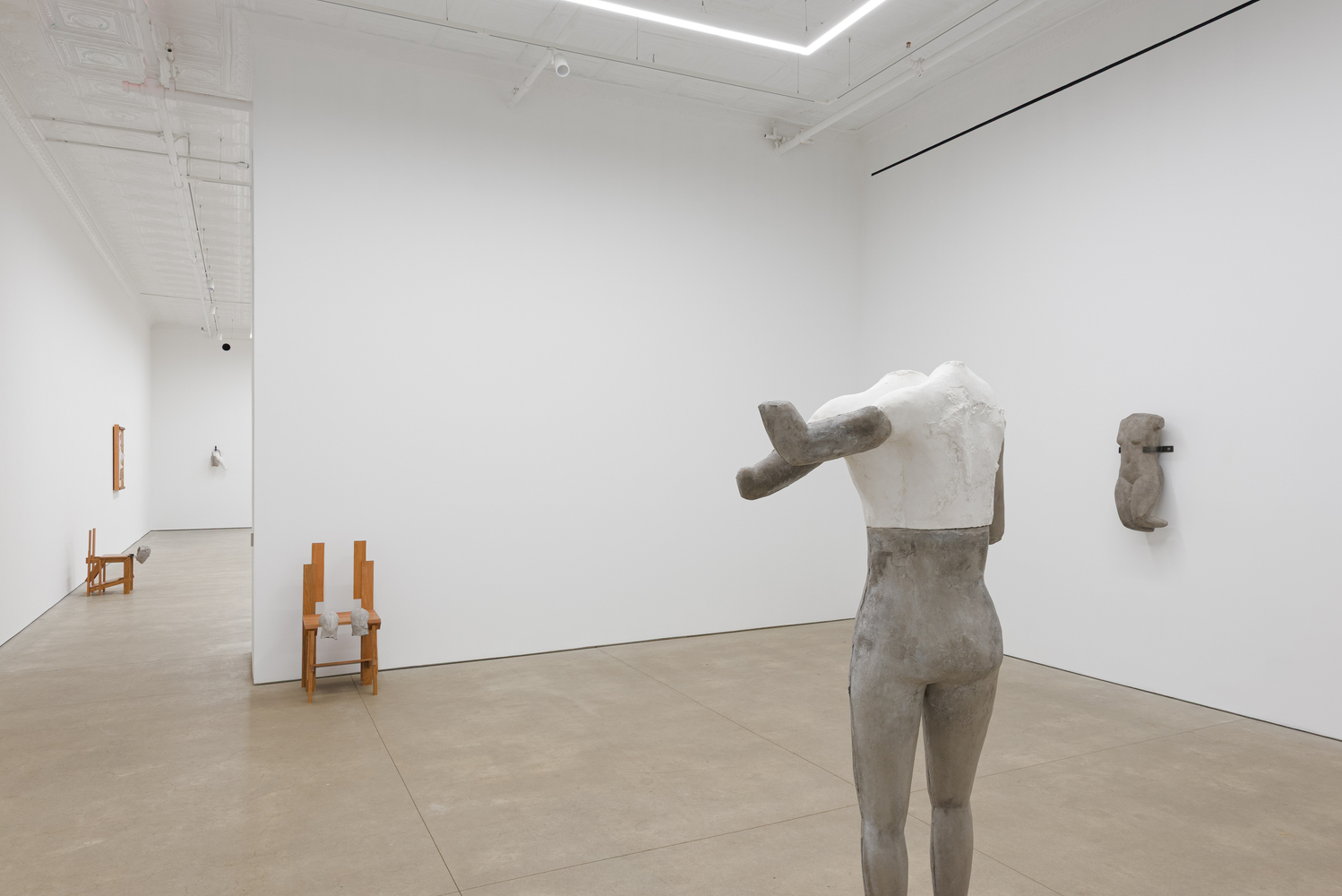
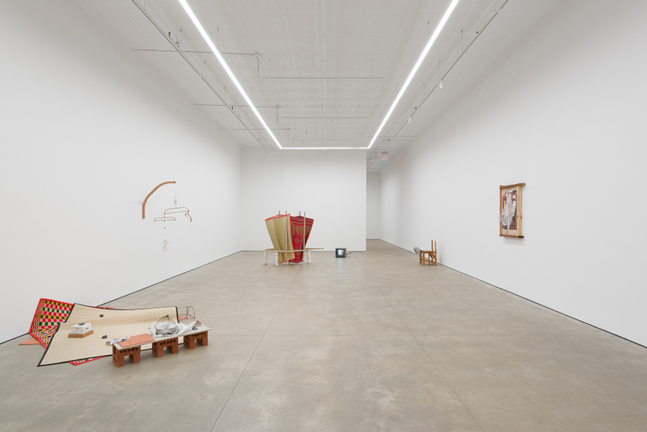
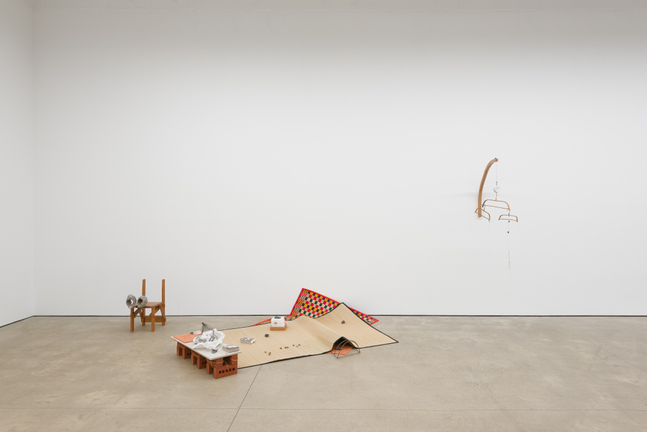
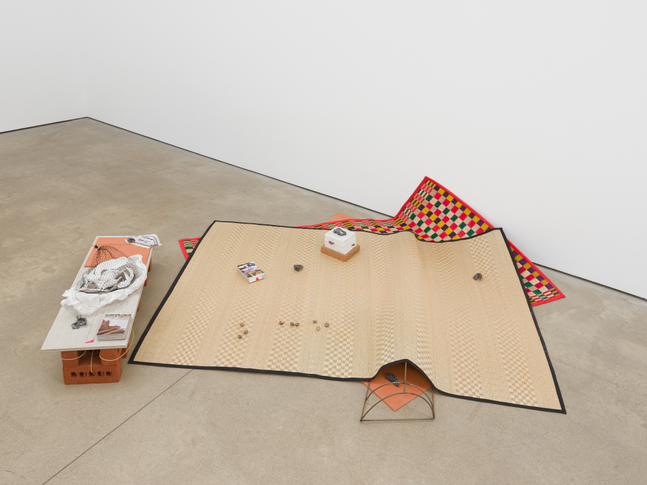
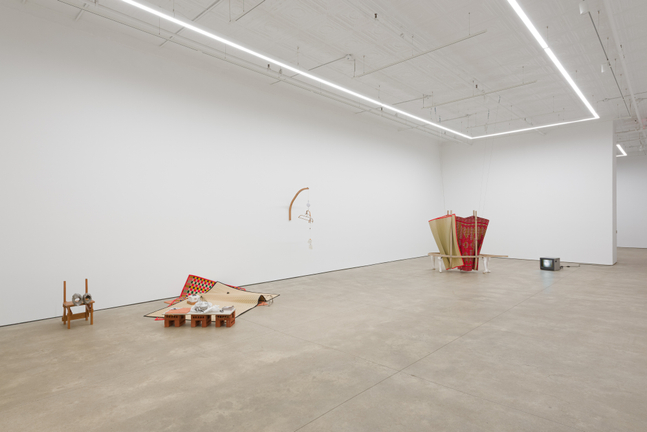
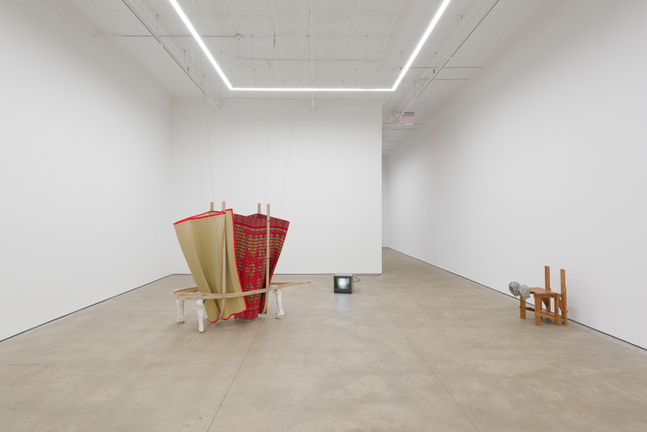
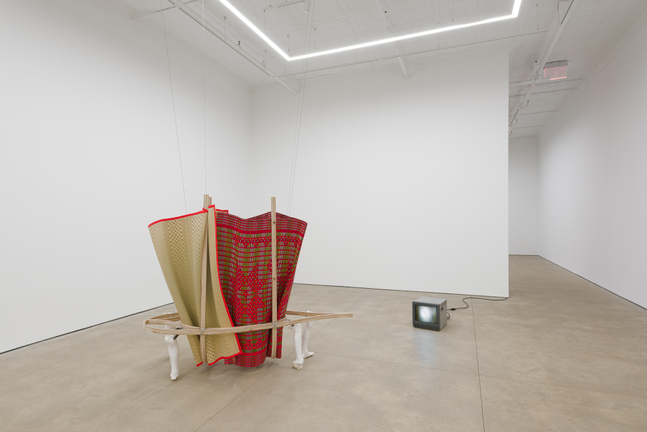
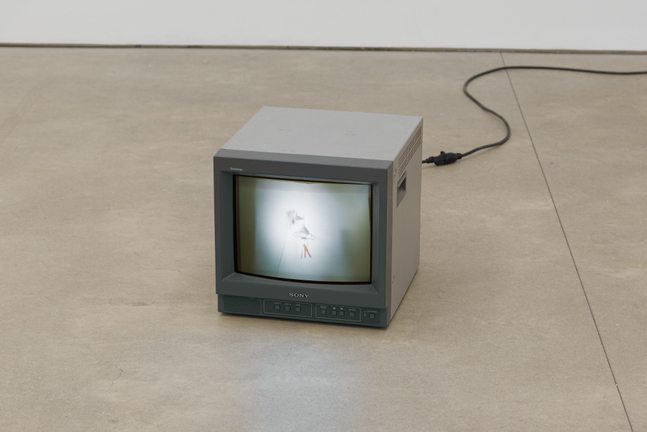
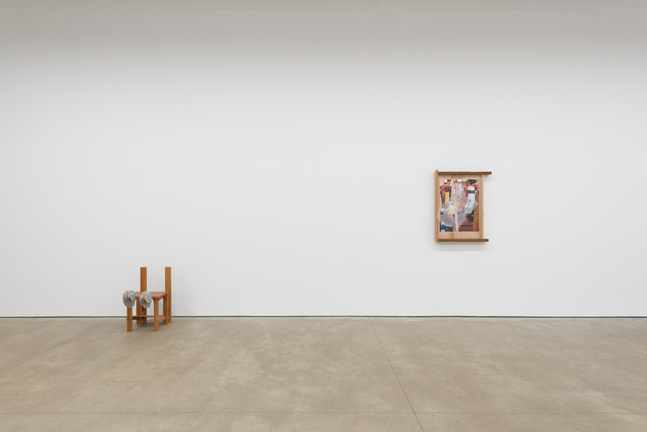
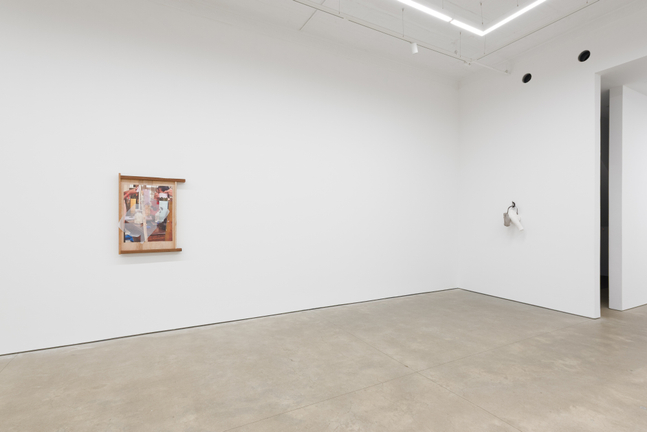
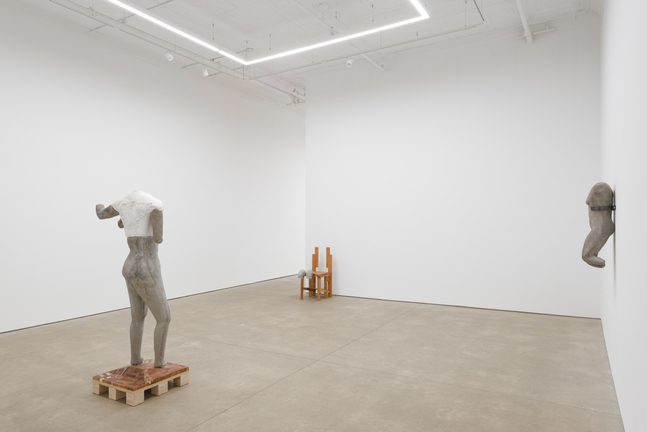
In another sculpture, Origin of the Tiger - CRUS, 2026, Yu transforms a coffee filter designed by the same friend into a giant wooden structure. With reed mats forming its crib-like basin, the structure is partially suspended in space and partially supported by five plaster casts of various children’s legs. Against the wall, a mobile music box attached to an extended wooden arm plays a recording of the children Yu worked with in Phnom Penh reading “Origin of The Tiger” in Khmer.
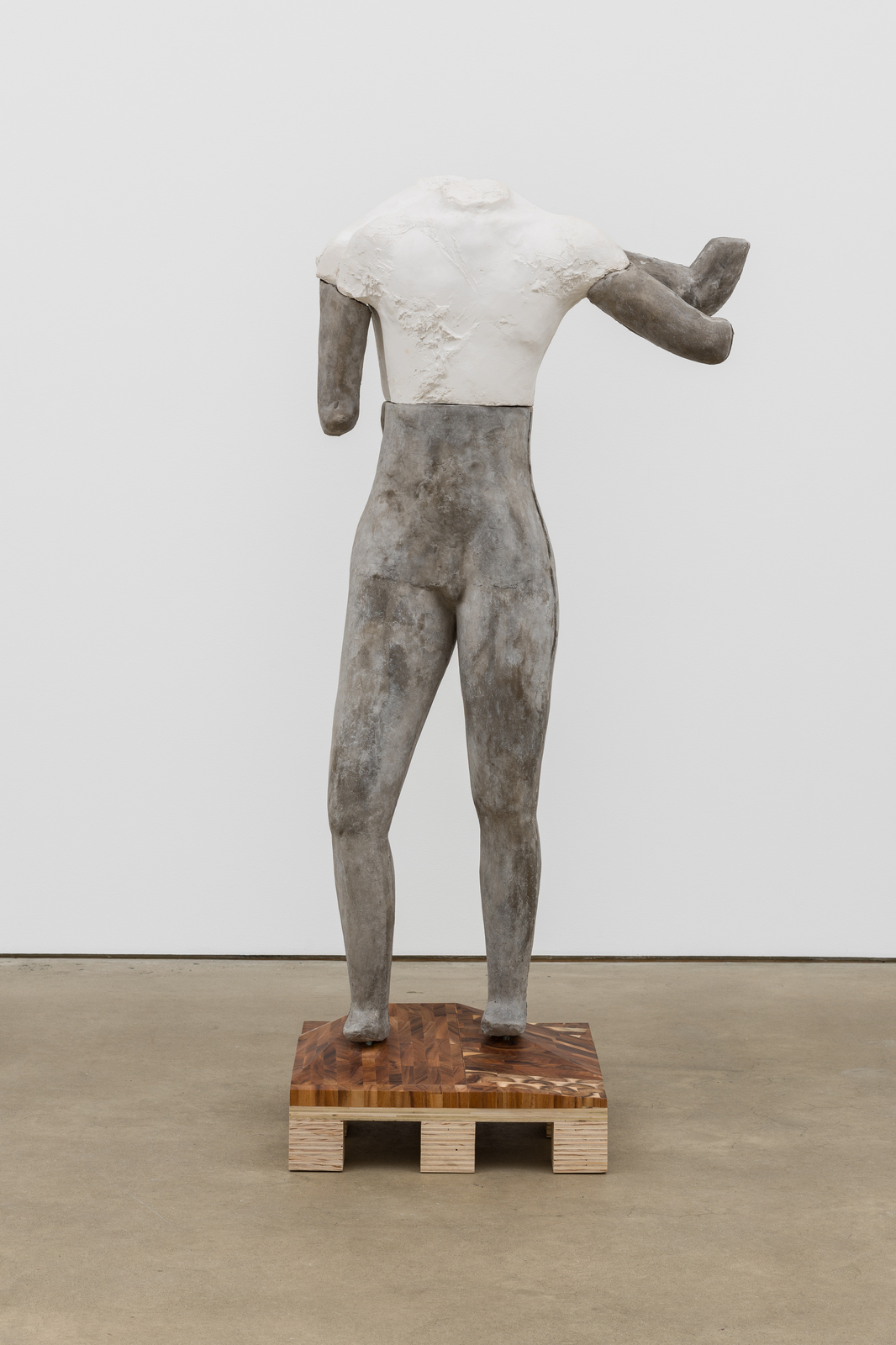
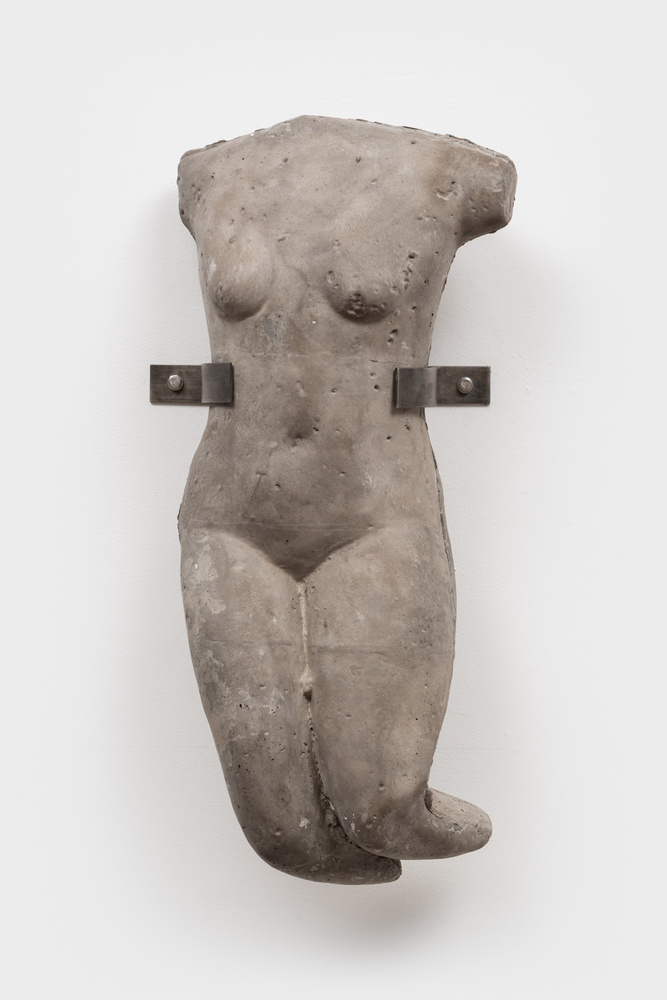
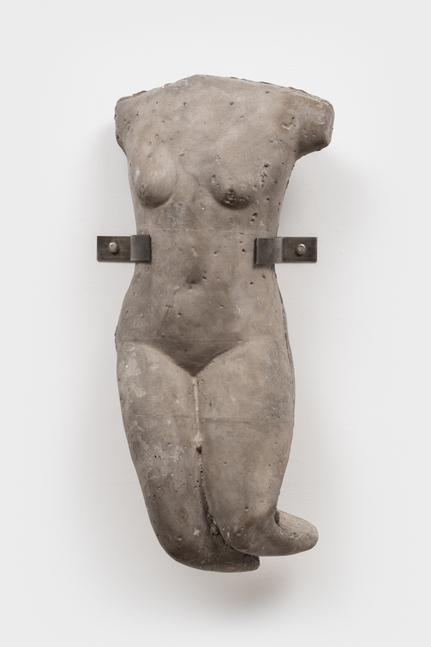
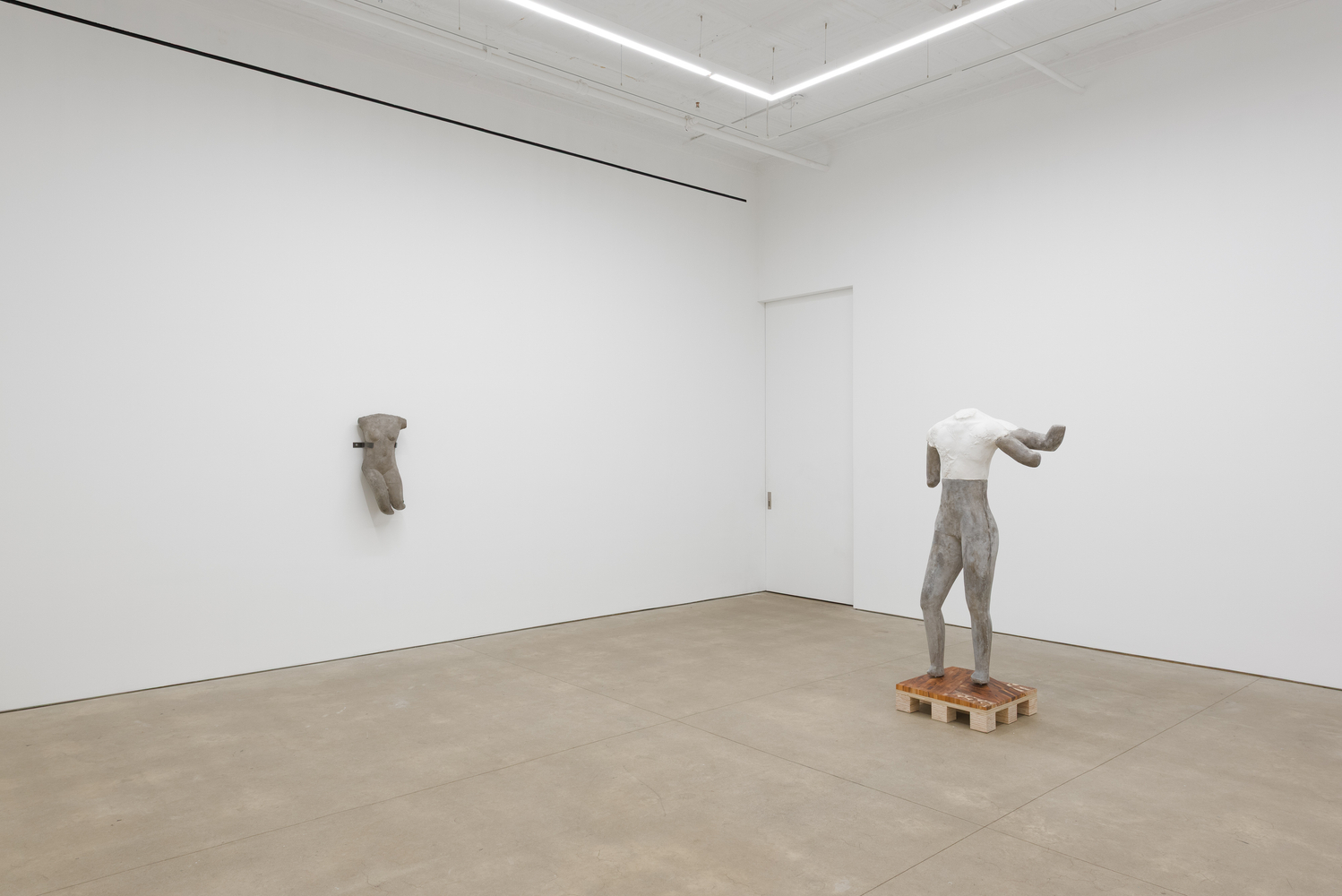
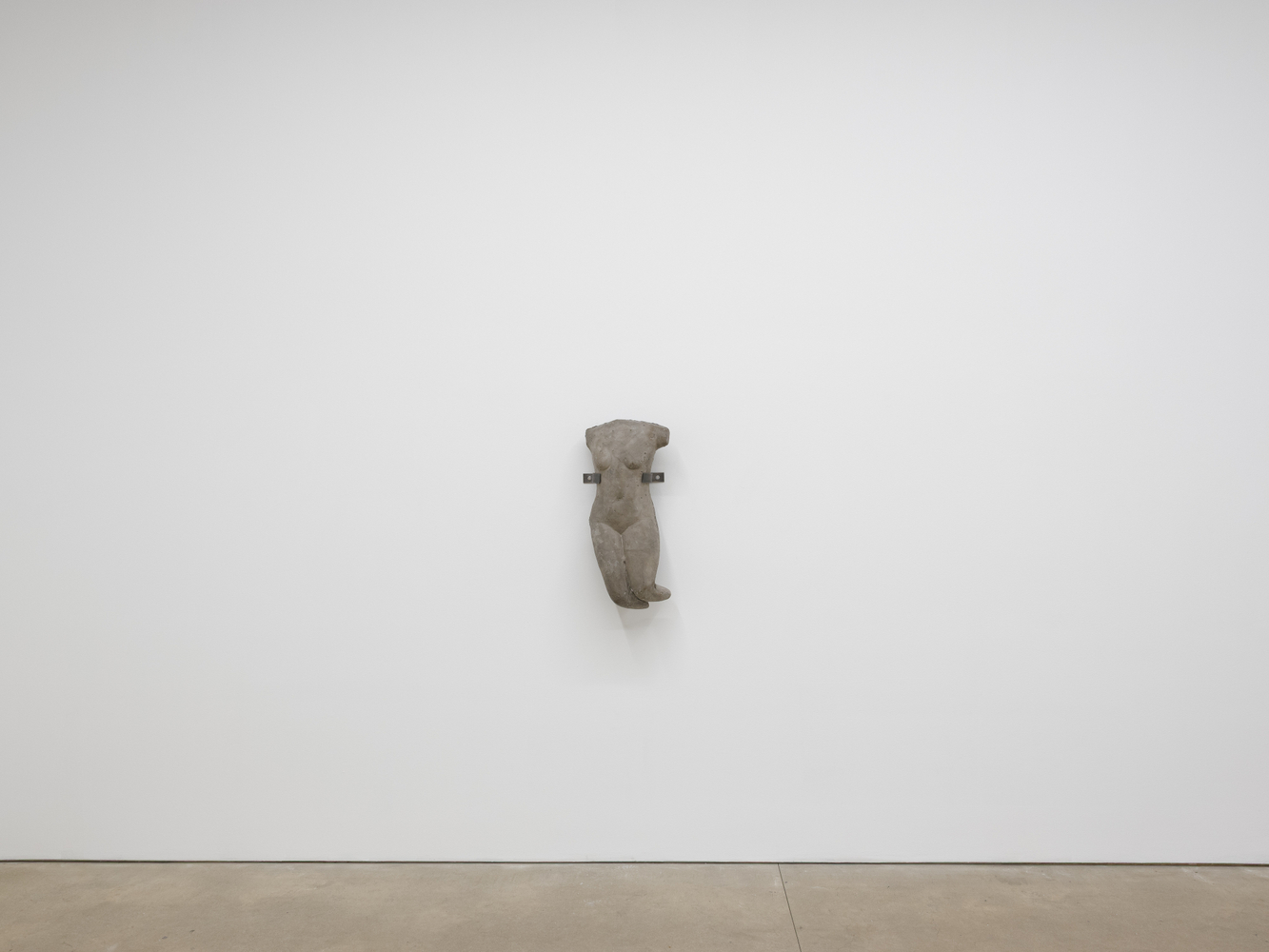
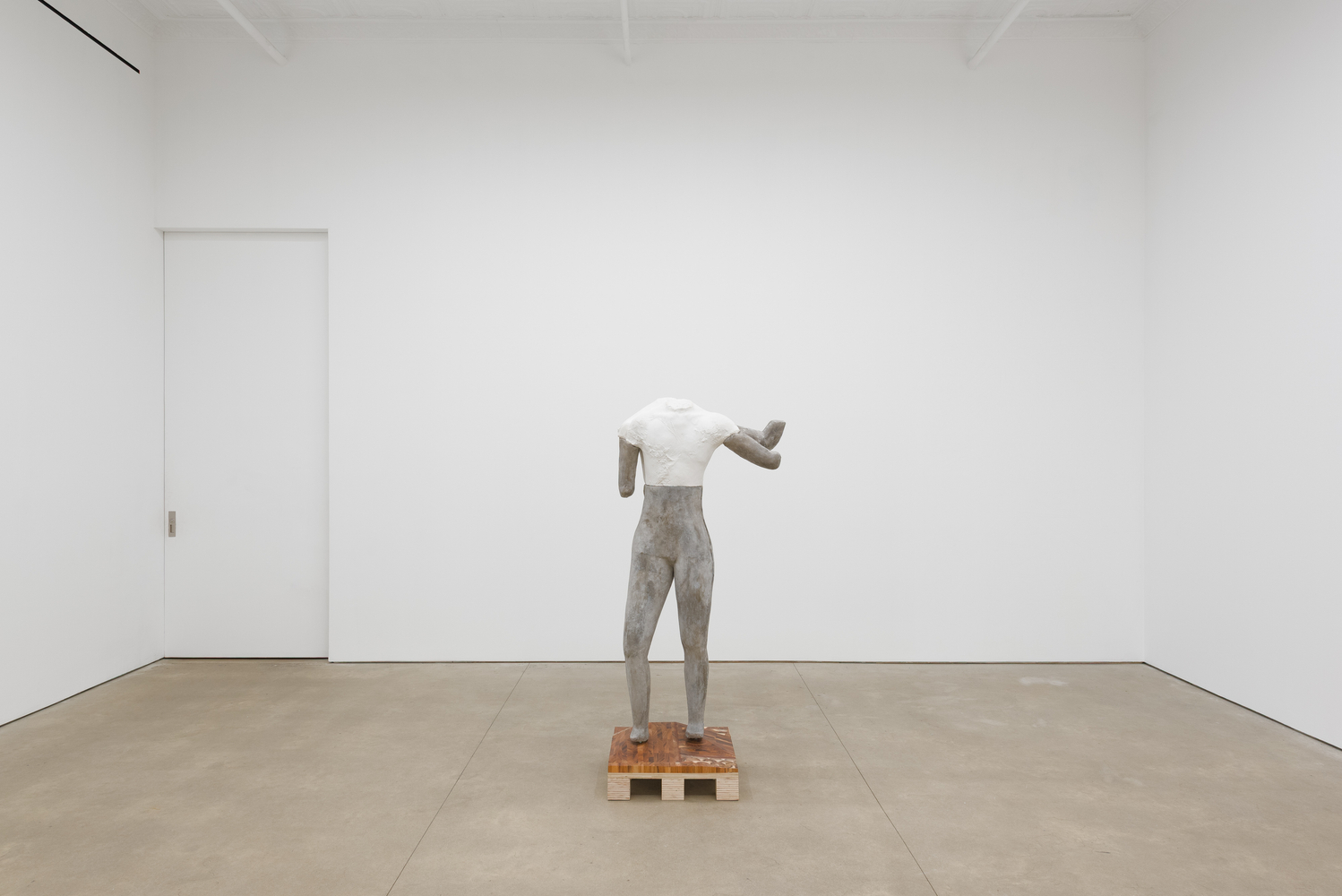
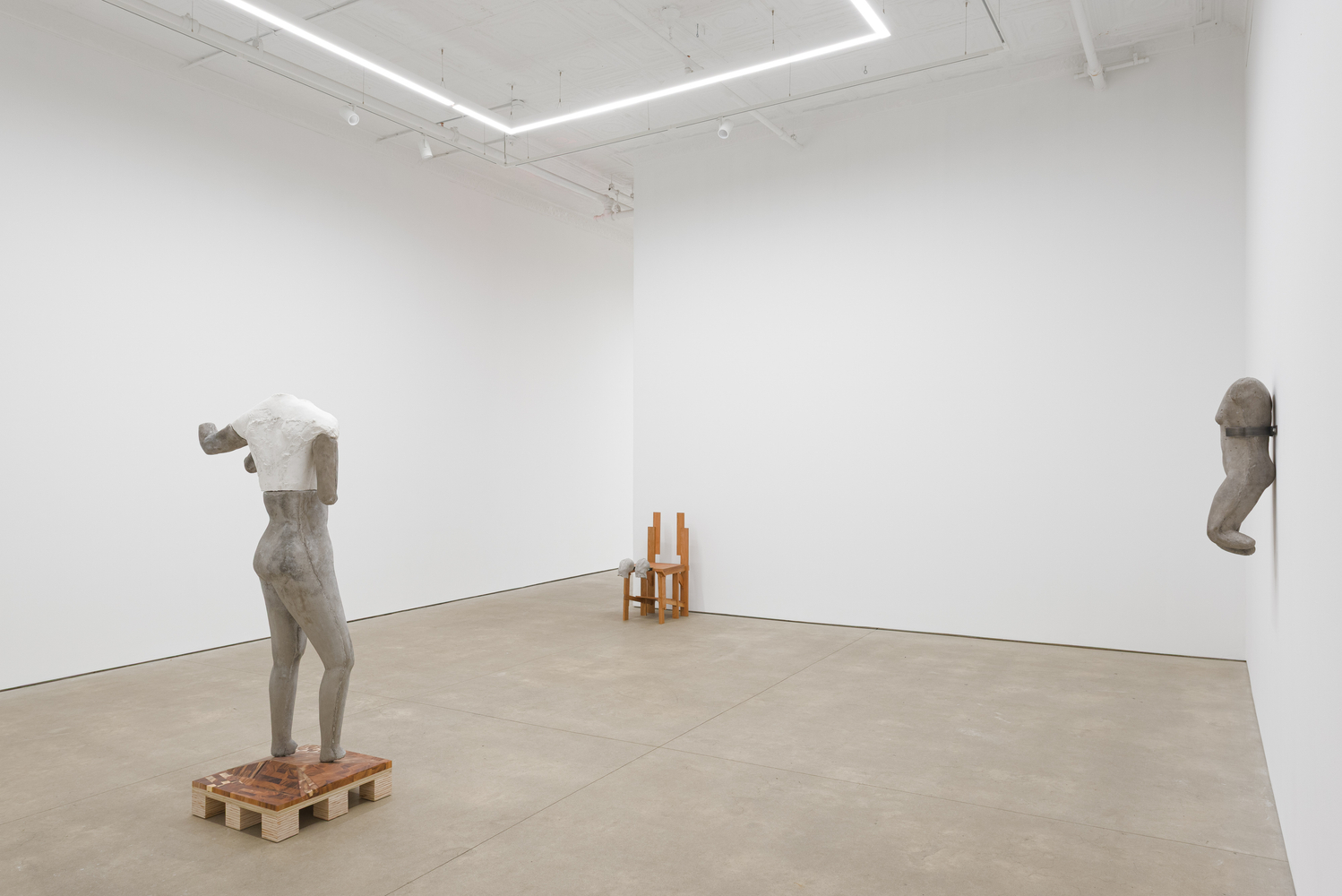
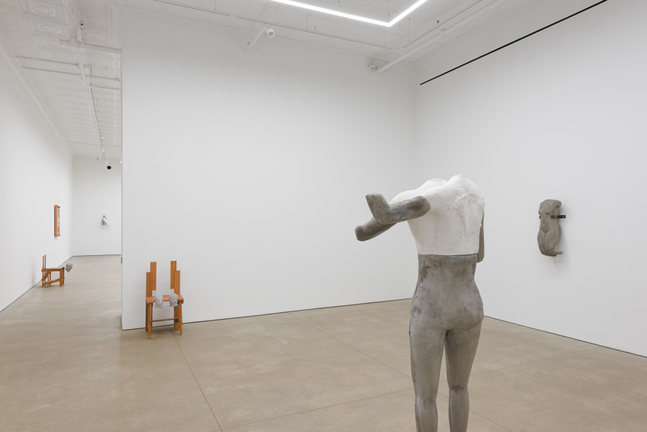
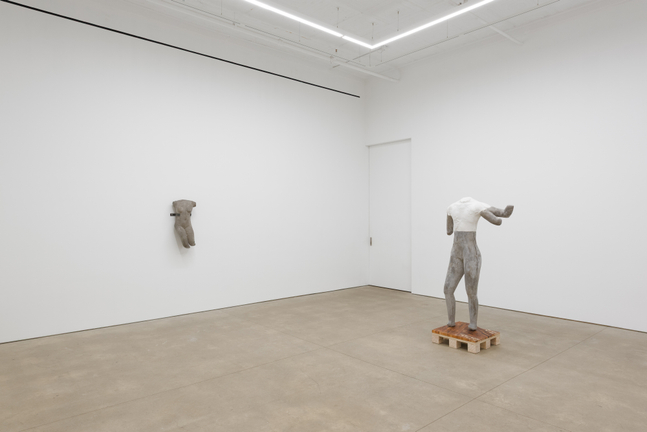
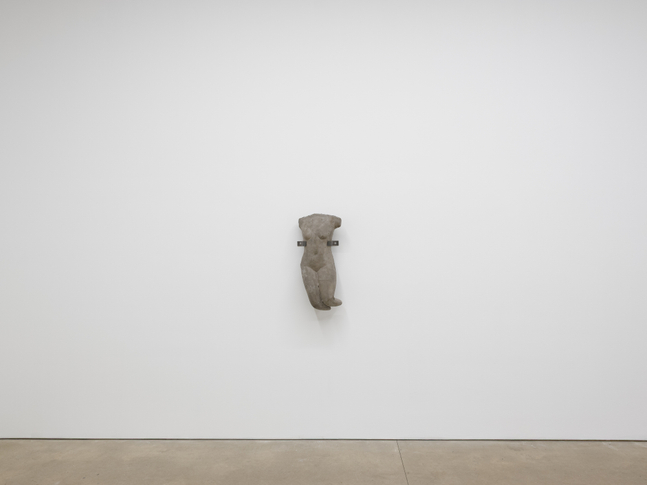
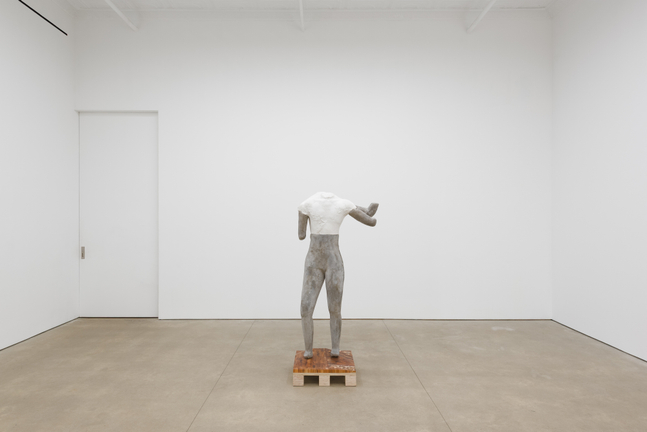
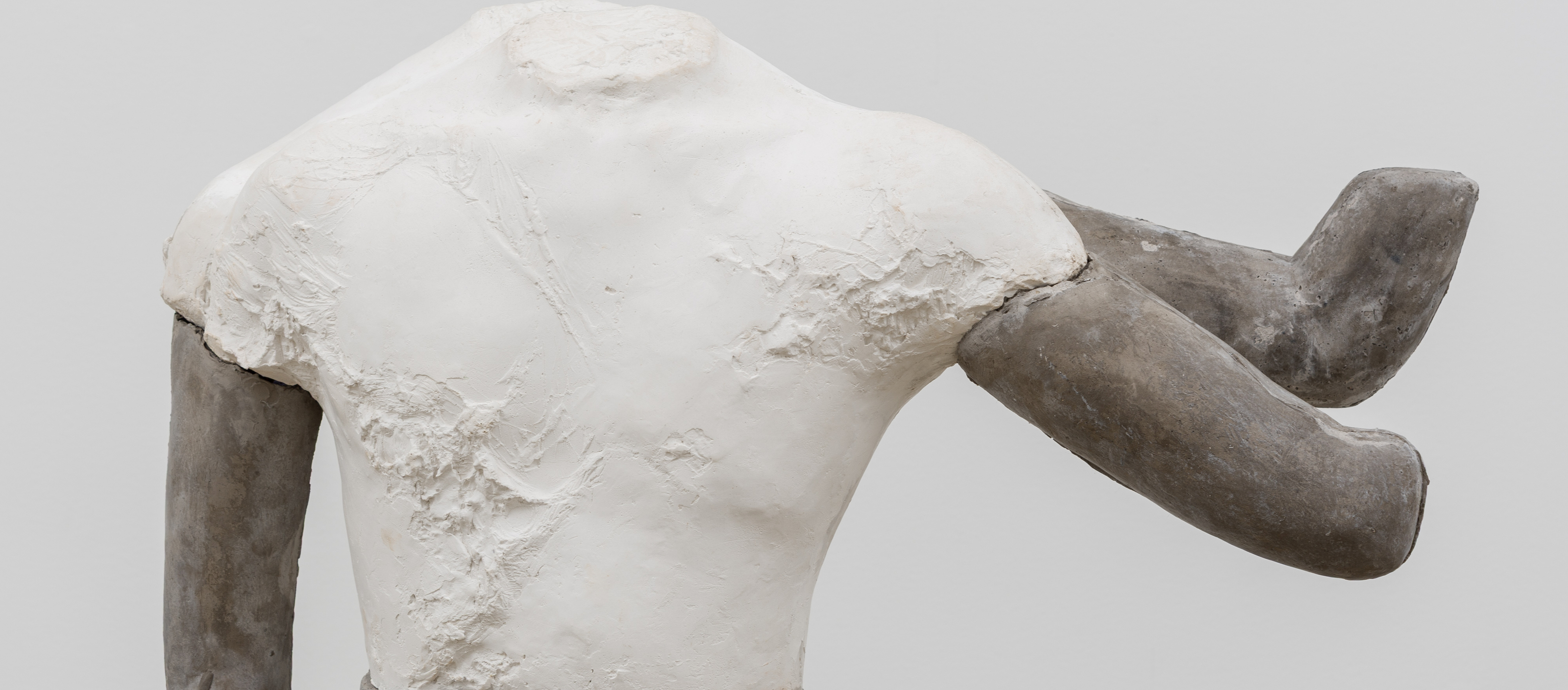
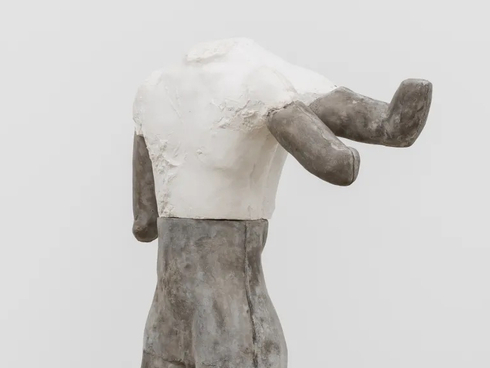
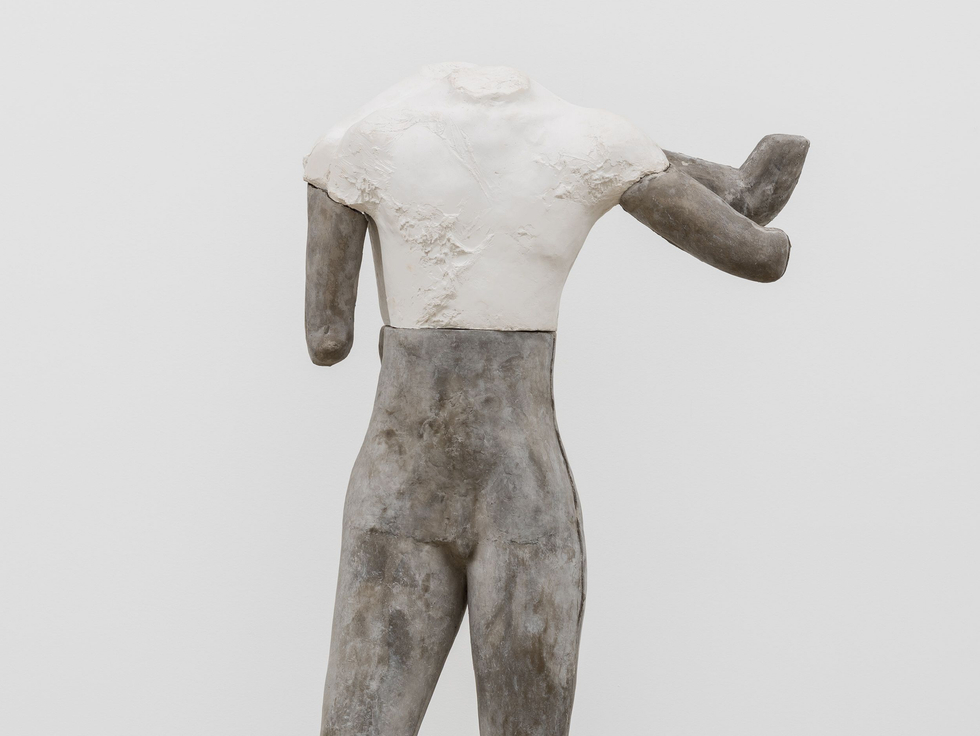
While the first room is communal and social, much like the workshops and residency Yu organized in Cambodia, the second room is solitary and private. Taking the form of a monumental figure, the newest and largest work in an ongoing series, Flesh in Stone, Flesh in Stone - Anthropos VI, 2026, is inspired by a monolithic ancient statue of Krishna lifting Mount Govardhana, ca. 600, housed in the National Museum of Cambodia. One of eight such figures, the legs of the Krishna in the National Museum had long been misattributed as part of another ancient figure in the collection of the Cleveland Museum of Art. Over the years, determining which fragments belong to which sculpture has continuously been a challenge. In Flesh in Stone - Anthropos VI, 2026, Yu mimics the Cambodian Krishna’s long journey of restoration. While in the past, Yu used casts from her own body, for this work she took references from both life and ancient sculpture to create a final work that is both a unified whole and inharmonious composite, each section cast from different people and carried in suitcases from one city to the next.
Challenging classical paradigms by embracing imperfection, Yu has built a practice rooted in the beauty of instability and the wholeness amidst fracture. Origin of the Tiger functions as both an archive of experiences and a multiplicitous organism, amassing elements of the body, moments from history, and experiences collected across the globe. By harnessing the strength of these combined fragments, Origin of the Tiger reveals the future potential for humanity to reach higher forms of existence through bold collaboration.
Yu Ji (b. 1985) obtained her MFA at the Fine Art College of Shanghai University in 2011. In 2008, she co-founded "am art space," an artist-led initiative promoting experimentation and exchanges between artists, curators and the public. Her recent solo exhibitions include Hide Me in Your Belly, Centro Pecci, Prato, Italy; Protrude, Sadie Coles HQ, London, UK; We the singular in multiple ghosts. I the multiple as parts of whole., Institute of Contemporary Arts at NYU Shanghai, China; and Yu Ji: A Guest, A Host, A Ghost, Orange County Museum of Art, Costa Mesa, CA; among others. Her work has been featured in group exhibitions at Kiang Malingue, Hong Kong; New Museum, New York, NY; Rockbund Art Museum, Shanghai, China; Palais de Tokyo, Paris, France; and more. Her work is part of the public collections of De Ying Foundation, Shanghai, China; Longlati Foundation, Shanghai, China; Louisiana Museum of Modern Art, Humlebaek, Denmark; and M+, Hong Kong. In 2019, her work was included in the 58th edition of the Venice Biennale, May You Live in Interesting Times. In 2023, Yu unveiled Column-Untitled No.3, a public art installation commissioned by the High Line, New York, NY. In Fall 2025, Yu was featured in the group exhibition to ignite our skin at SculptureCenter, Long Island City, NY, curated by Jovanna Venegas. Her work is currently on view as part of In Interludes and Transitions, the 2026 Diriyah Contemporary Art Biennale in Saudi Arabia.
Special thanks to Jil D. and the participants of Phnom Penh residency in 2024, Casey Robbins, Ho King Man, Kojiro Kobayashi, and Boat Zhang, which was supported by M Art Foundation. Additional thanks to Do Longyue for their collaboration on the wooden elements throughout the exhibition.