
Returning to the Hong Kong Convention and Exhibition Centre from March 27–29, Art Basel Hong Kong 2026 features 240 galleries from 41 countries and territories, with more than half of the participating galleries operating spaces across the Asia Pacific. With programs unfolding across multiple locations in the city, the art fair continues to connect regional artistic practices with international audiences, reinforcing Hong Kong’s role as a major global art hub.
“The 2026 edition of Art Basel Hong Kong is a celebration of the city’s status as Asia’s cultural hub. Hong Kong’s unique strengths—its tax-free status, free-port heritage, logistical ease, multilingual accessibility, and unrivaled connectivity—continue to underpin its position as a gateway to the region’s rich cultural diversity and dynamic art market,” Angelle Siyang-Le, Director of Art Basel Hong Kong, shared. “Art Basel Hong Kong is more than an art fair—it is a living ecosystem where creativity and culture drive a vibrant, resilient art market.”
From Philip Guston’s large-scale figurative painting of disembodied feet standing on a worn rug against a stark red landscape at Hauser & Wirth, to pioneering Dansaekhwa artist Ha Chong-Hyun’s abstract works that emphasize the physical qualities of his materials rather than depicting images, displayed across three major galleries, and Mark Manders’s sublime sculptural head that conveys a sense of stillness and suspended time, these are the standout artworks at this year’s fair.
8. Martin Wong | P·P·O·W
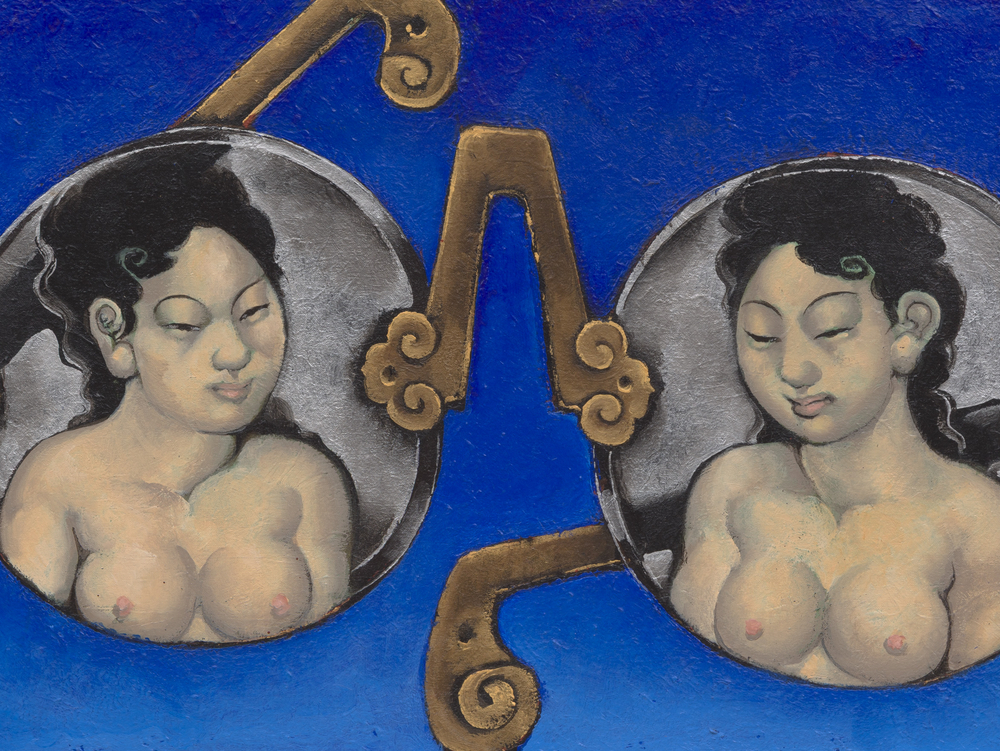
A prominent Chinese-American painter and collector, Martin Wong was known for his detailed, realistic portrayals of the urban landscapes in New York’s Lower East Side and Chinatown during the 1980s. Exploring themes of ethnic identity, queer sexuality, and street culture, his works often featured detailed brick walls, tenement buildings, and various writing systems, including sign language symbols, astrological signs, and graffiti tags. A dedicated collector and advocate of graffiti art during a time when it faced significant stigma, he co-founded the Museum of American Graffiti in 1989 and later contributed over 300 pieces to the Museum of the City of New York. The visionary realist’s pop culture painting Untitled (two women), displayed in the gallery’s group exhibition, ironically features two nude Chinese women reflected in mechanical reading glasses, subtly blending commercial packaging art with a sex parlor advertisement.