
AT THE OPENING OF Maxwell Graham’s dual show of Hans Haacke and Louise Lawler, a phrase from the press release was on everybody’s lips: “The times when an artwork is made and the times when it is exhibited is important.” In the following weeks, I’ve seen the meme-ishly ungrammatical quote repurposed in tongue-in-cheek Instagram captions and copy-paste retorts in group chats—a friend even told me they wanted to make a hat brandishing the message. Something about the show has struck an intergenerational nerve among artists and writers in New York.
Entering the exhibition, viewers are met by a lone red arrow from Lawler’s work Alizarin (Terrorists are made, not born), 2023, directing the viewer over the balcony to the gallery space below. Here, several identical arrows—sublimation prints, mounted on plywood—have been installed in an ad hoc configuration, pointing in a loop around the ceiling and toward one another on a wall. Who are the terrorists? How are they made? Who makes them? By deploying ready-made language in corporatized shared space, Lawler emphasizes both the slipperiness of political speech and the importance of context in reading it. The viewer is asked to think through the phrase each time it is mobilized, to compare this new application with the prior one. Similarly, the dry gesture of the clip-art arrows demands examination of the physical or graphic space that carries or distributes the artwork: At Maxwell Graham, home to Lower Manhattan’s most cavernous white walls, the series draws the viewer’s eye to the vast height between top and bottom of the abundant gallery space. As we face yet another cynical and catastrophic war in the Middle East, Lawler’s arrows direct attention to the real estate commonly used by artists as sites of commerce—and just as easily used as sites of intervention and dissent (just as she did in the March 2024 issue of this magazine, in which she took out an ad featuring one of her red arrows pointing to the very same phrase).
Haacke, in his main contribution to the exhibition, Untitled #1, 2005, takes an opposite approach to Lawler in his explicit summoning of Bush-era nationalism. At the end of the long, lonely gallery, broken lightbulbs and an American-flag pin rest atop the innards of a battered, overturned table. Emerging from underneath the assemblage, a strip of steel is welded repeatedly with the words “first name last name.” The metal piece echoes an earlier Haacke design for a 9/11 memorial, which commented on the fact that such commissions were put to patriotic use before all the victims’ names were even confirmed, necessitating filler to populate the dedications. The work reads as maudlin yet sanguine, expressing a contempt for the instrumentalization of victims in launching the forever wars in Iraq and Afghanistan, while suggesting, through a cautious yet still-present patriotism, that Americans could unify to resist and overcome Bush’s authoritarian turn.
Coincidentally, another 9/11 memorial, Isa Genzken’s Disco‚ Soon (Ground Zero), 2008, is currently on view uptown at Galerie Buchholz alongside several floors of the artist’s proposals for public artworks. The sculpture proposes a twin-towers-size twenty-four-hour gay bar to be placed at Ground Zero, rendering the structure Impressionistically in cardboard, disco-ball mirror, and LED strips. It is intentionally idiosyncratic as a model, emphasizing everyday materials and Genzken’s touch more than the other (professionally made) architectural maquettes of sculpture-filled public plazas and art-laden facades that fill the Buchholz show. Unlike Haacke’s somber meditation on the event, Genzken suggests that the territory should be repurposed for organic social use, breaking apart the conventionally drab, skyscraper-filled Financial District to bring about campy, hedonistic joy from the rubble.
WHETHER IN MEDIA DISCOURSE or shared physical space, Lawler, Haacke, and Genzken assert the Graeberite truth that sites of artistic exchange are made by those who use them and can just as easily be remade another way. The widespread propagation of the Maxwell Graham press release suggests that despite widespread mistrust of institutions, people still look to public-facing platforms (be they magazines, galleries, or public art commissions) to help them make sense of the calamitous present day. And yet, among a younger generation of artists, shared recognition of crisis has seemed to yield different conclusions.
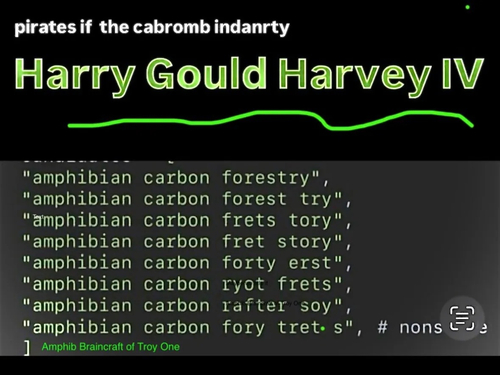
In the past few months, the Instagram page Pirates of the Carbomb Infantry has attracted significant attention online, serving as a digital gallery for the unrepresented or under-exhibited. Exhibitions are organized via DM, through which account creator and artist Arden Asher-Taste solicits contributors with the following text: “We want to do show with you. You make show in alley or apartment or bedroom and take iPhone pictures. We make poster. You want this?” With documentation of shows sometimes including dozens of images, and posts from several shows a day, the account fills the feeds of anyone who follows it (and many who do not, thanks to continual reposting from friends of exhibitors). As opposed to the top-down interventions of Lawler, Haacke, and Genzken, the page serves as a bottom-up offensive in a digital war for attention.
Pirates, from its name to its dissemination tactics, posits that young artists must work within Instagram’s algorithm to foist their work onto other people’s phones, landing on unsuspecting screens like swashbucklers boarding a ship. In Harry Gould Harvey IV’s “Amphib Braincraft of Troy One,” posted this month, the artist shares videos from baby-monitor-like cameras and Ring doorbells, watching himself making work and watching others watching his CCTV feeds. The posts are bizarre and uncomfortable loops that successfully probe the performative logic of the platform itself. Harvey’s videos feature screeching feedback echoes as a reference to algorithmic cycles, turning the dissonance of one screen filming another into a critical feature of his documentation.
It’s easy to see why a guerrilla approach might appear the only viable alternative to young artists. What’s more complex is the fact that exclusive or elite institutions of artistic exchange also rely on Instagram to disseminate their own curatorial or editorial work. In this sense, cutting out the middleman and hacking your way to a sizable social media following might seem better than a second-best option—it might actually damage the middleman in the process. While Pirates is a notable example, one need only look at the mass proliferation of Substack-, Patreon-, or YouTube-based writers and critics in the past five years to see wider proof of the phenomenon, with all heavily reliant on social media to acquire new paying subscribers.
In late February, Pirates of the Carbomb Infantry announced that it would hold a panel discussion in Chinatown, leaping from a digital to a physical town square. The panel had been put together in the same way Asher-Taste curates the Instagram page, meaning that the artists were contacted individually and had little to no knowledge of the event’s format or the identity of their interlocutors ahead of time. The discussion began with a freewheeling, thirty-minute state of the artistic union from Matthew Voor, organizer of Triest. Subjects as disparate as hipster anthropology, new-media theory, and political philosophy were offered as possible points of departure, but the conversation soon turned to listing the seemingly innumerable reasons why it seems harder than ever to make or show art.
I’m not ashamed to say I left as soon as the Q&A began; an audience member requested that the panelists try harder to work through the murky themes of the introduction, and I did not feel sanguine about the prospect of a happy outcome. A paradox emerged: While the best projects shared on the Pirates Instagram account stage meaningful artistic interventions by taking control of the means of distribution, choosing engagement as the principal subject of one’s work runs the risk of hollowness.
SEEKING TO ESCAPE the digital sphere, I visited Triest’s new Midtown space (recently opened after five years in Brooklyn) for the opening of Devon Lowman’s “Greetings from Orlando.” The show is sparsely hung, with four rounded plastic, carbon fiber, and Bondo fiberglass shells evenly spaced on one wall under two strips of harsh LED lights. In using materials traditionally associated with budget car repair, Lowman endows his surfaces with crevices and ridges, features only noticeable via close scrutiny under severe lighting. The bold primary colors and blob-like forms of the works reminded me of the early-2000s consumer design of iPods or CRT TVs, evoking the (naively) bright optimism of the bubbling digital culture that marked the post-9/11 era of Haacke’s and Genzken’s proposals. Looking at the scraped lime-green surface of one work, I imagined viewing a continually repaired cell phone under a magnifying glass, noting the places where the smooth plastic has cracked and patched over in the past twenty years.
Before I left, I was approached by a woman who asked what I thought about the show: the artist’s mother, who mentioned how glad she was to talk to visitors about her son’s work. When I asked a question she couldn’t answer, she pulled Lowman over by the sleeve and introduced us, making sure I had the chance to learn everything I needed to know about the sculptures. If only such bonhomie could be found on Instagram. For artists convinced that “the times when an artwork is made and the times when it is exhibited is important,” it seems more necessary than ever to retain control of one’s methods of exhibition.